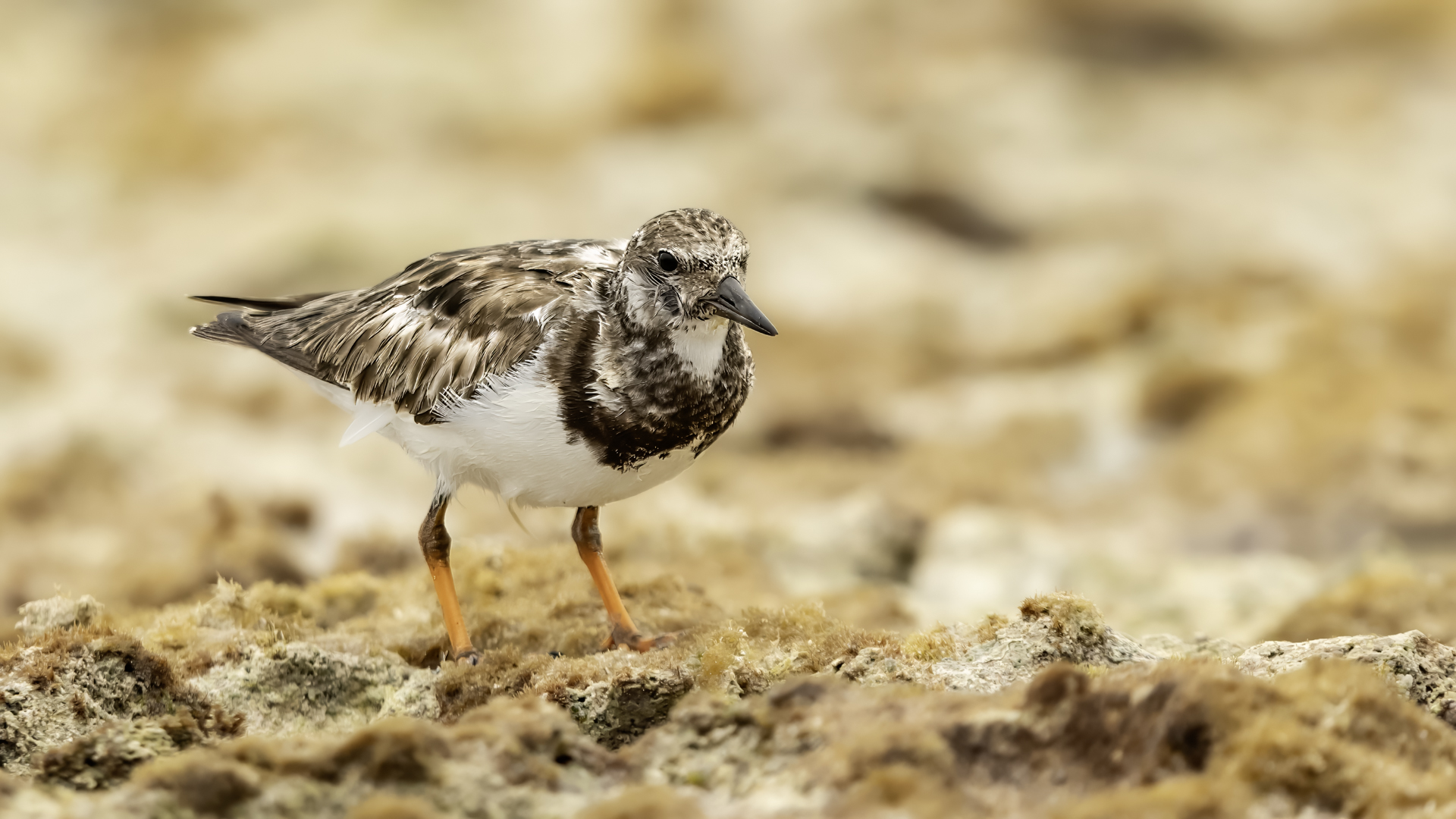
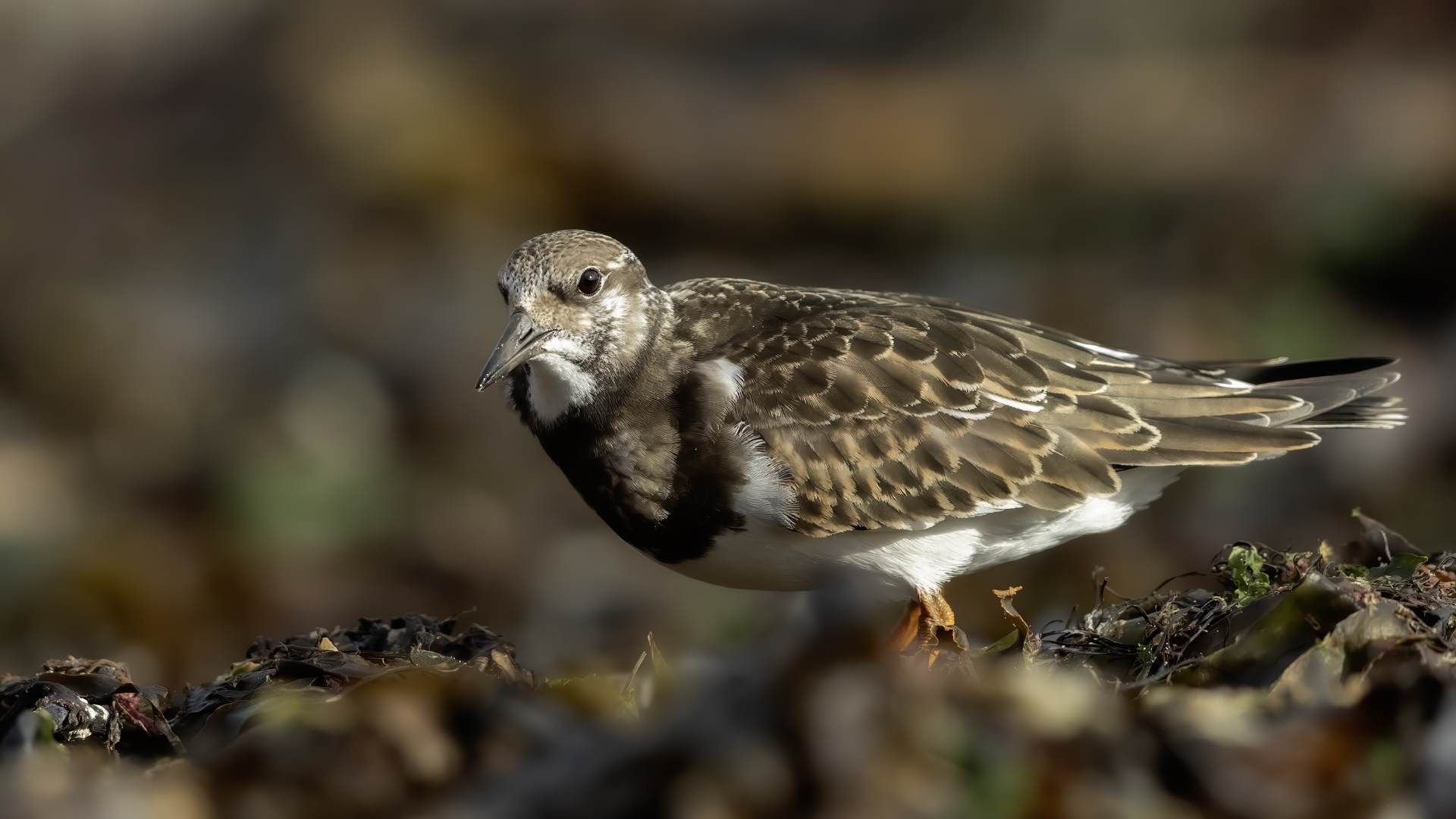
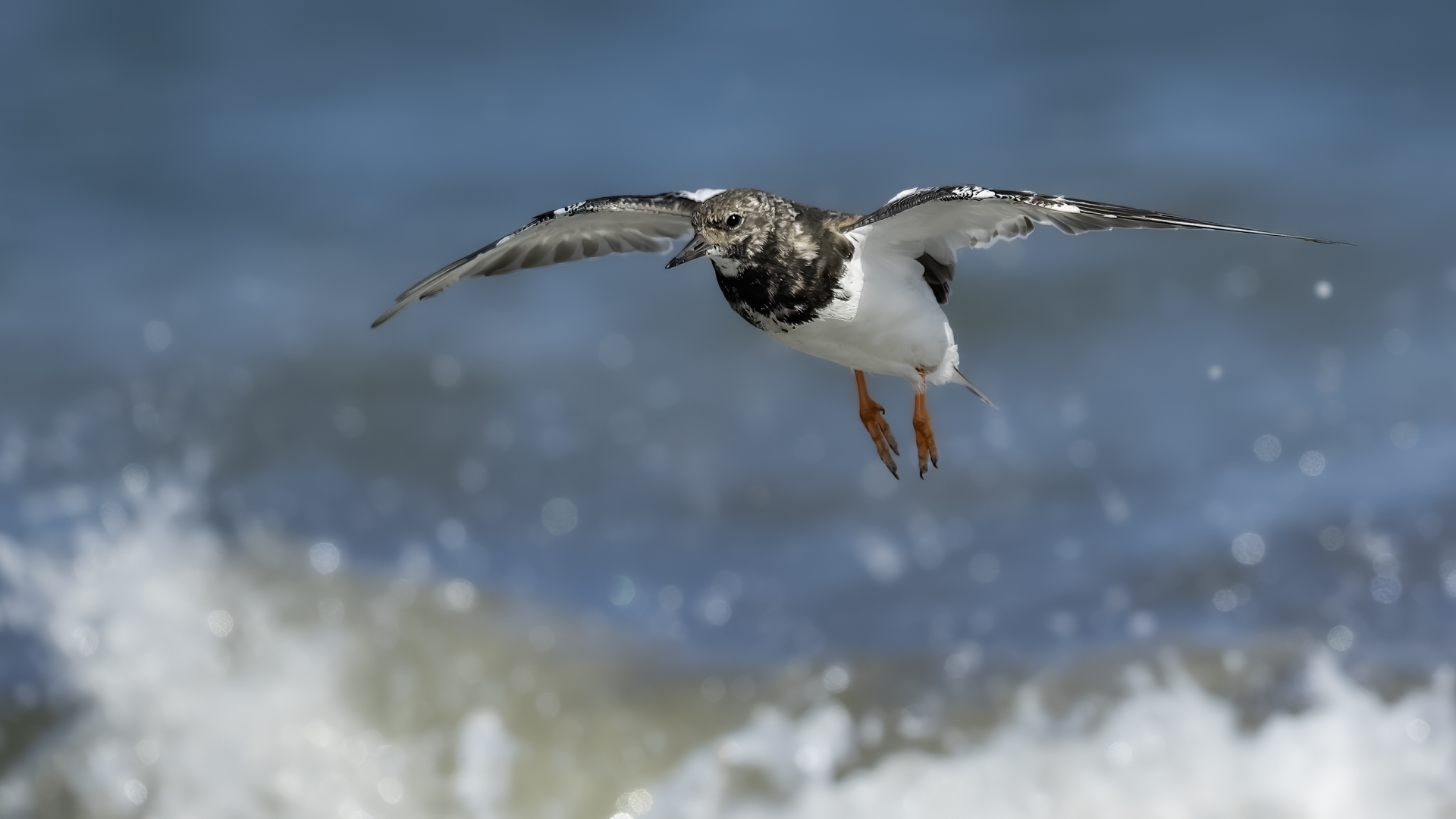
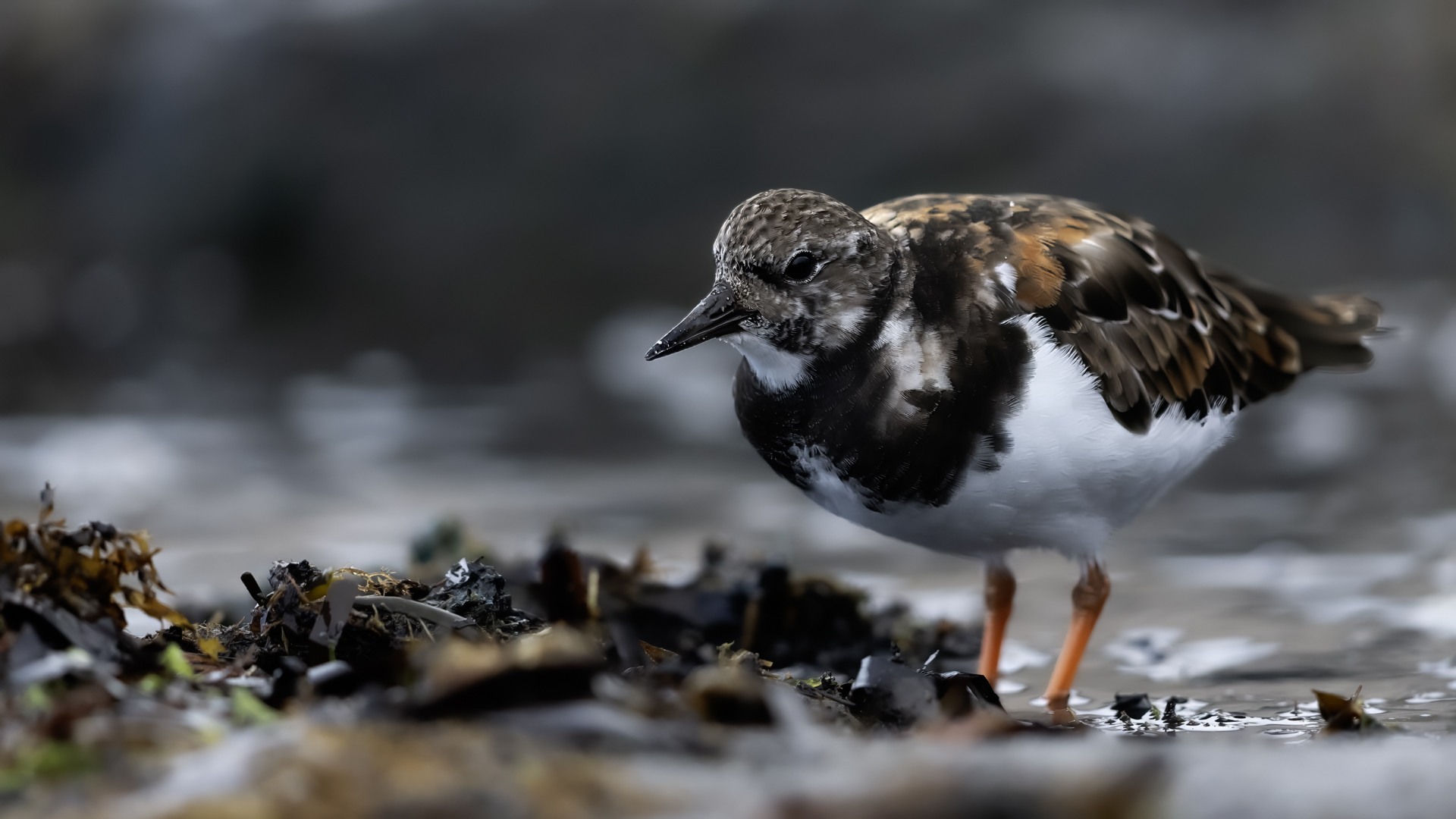
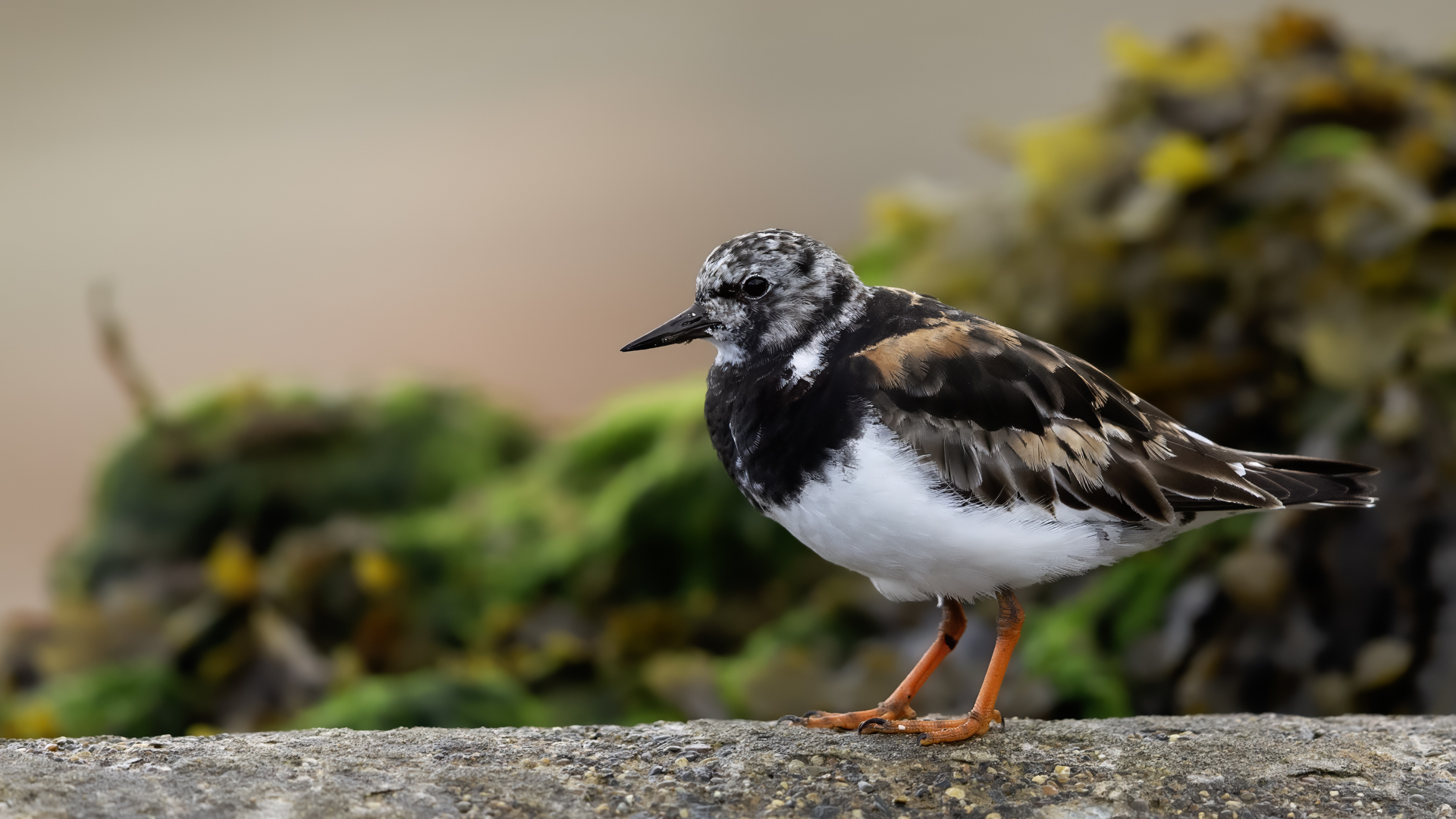
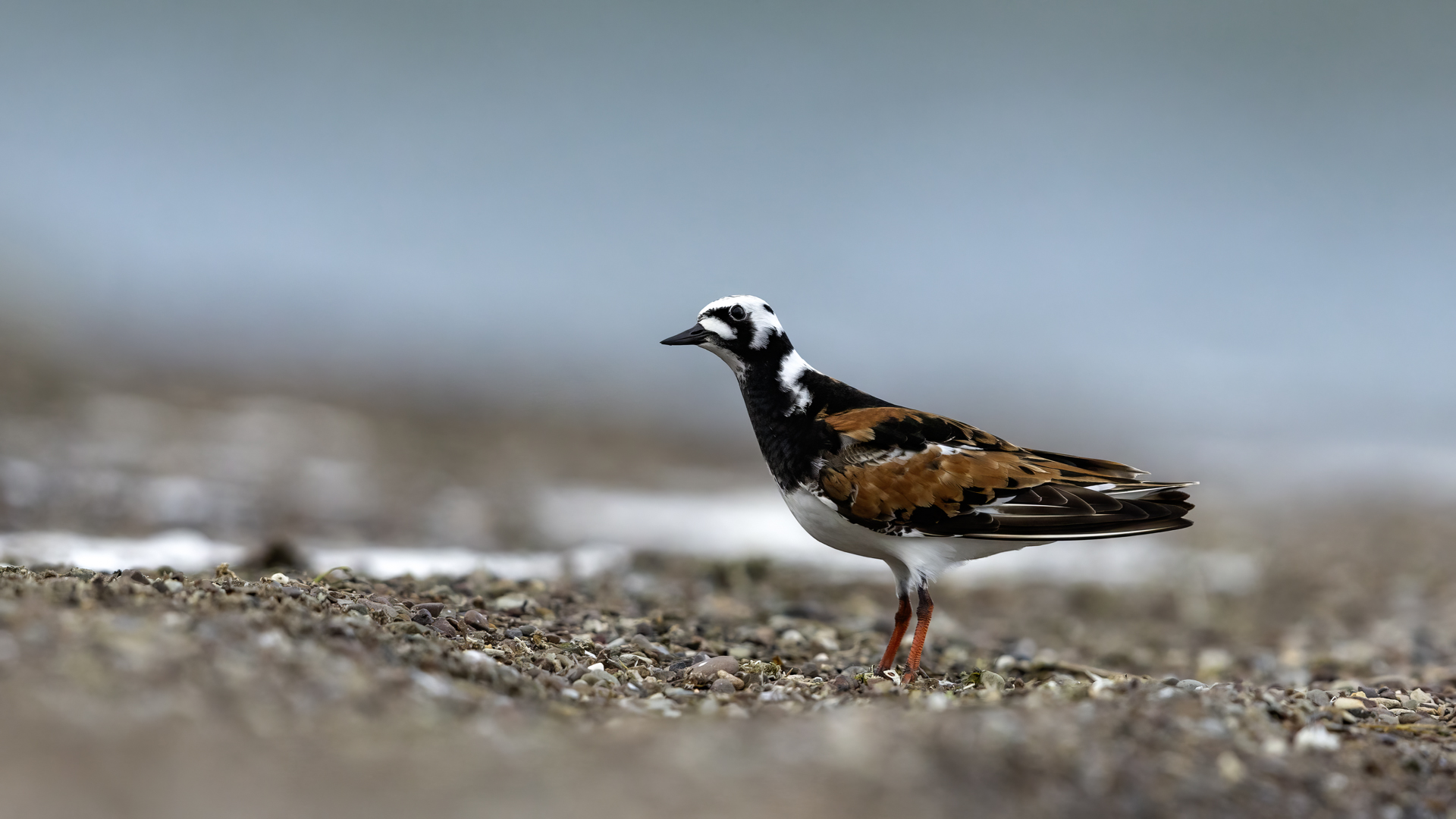
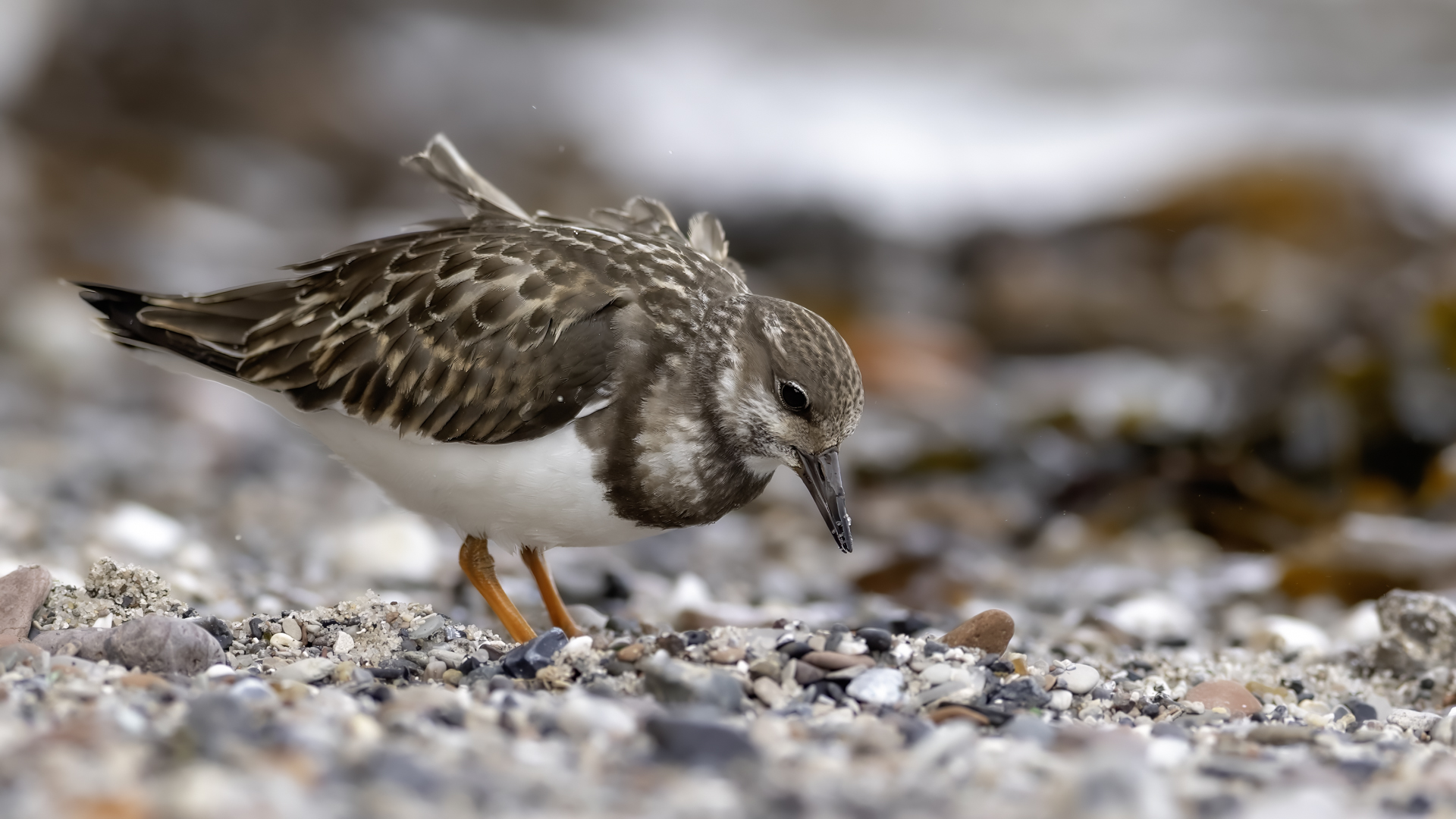
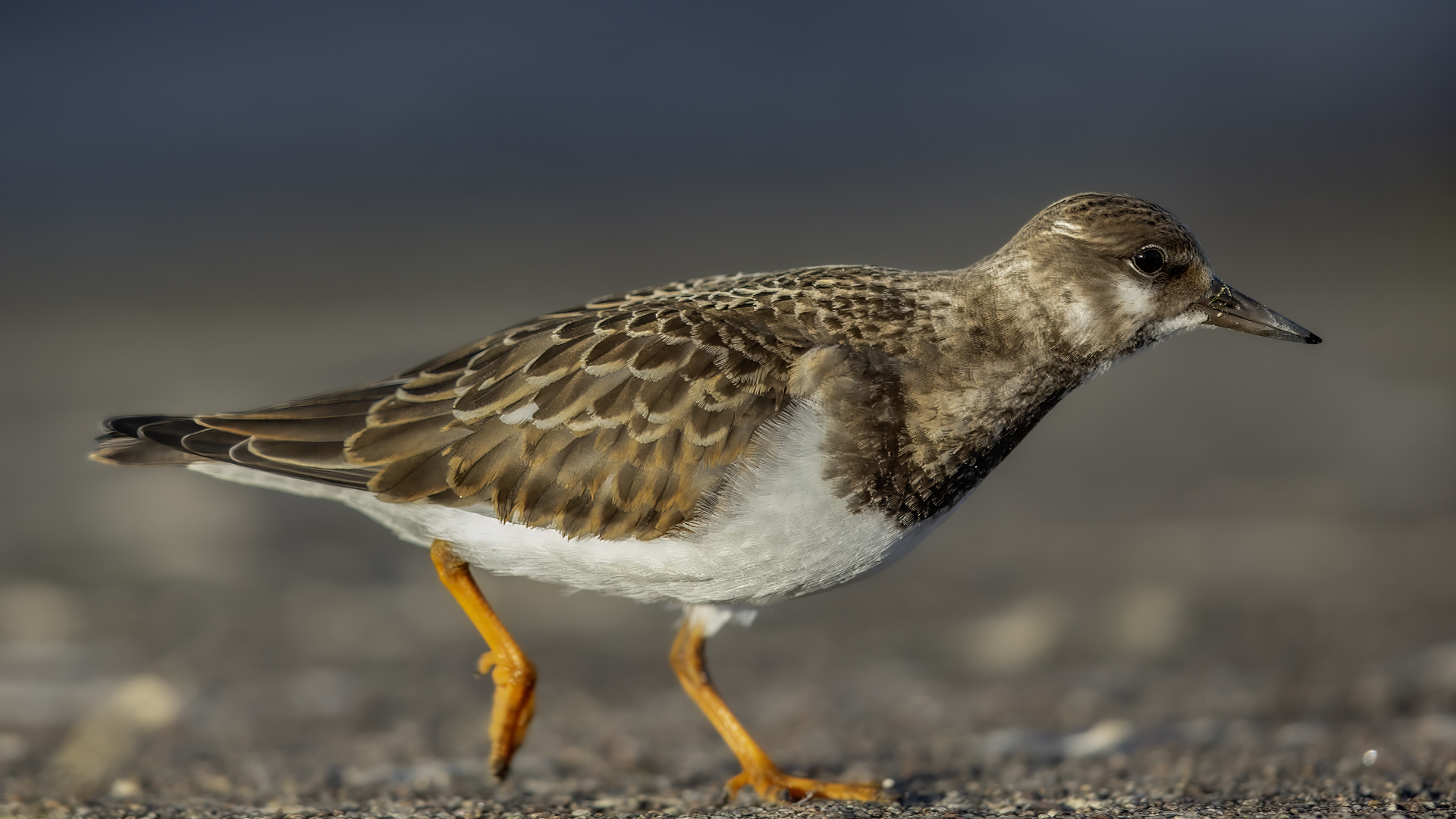
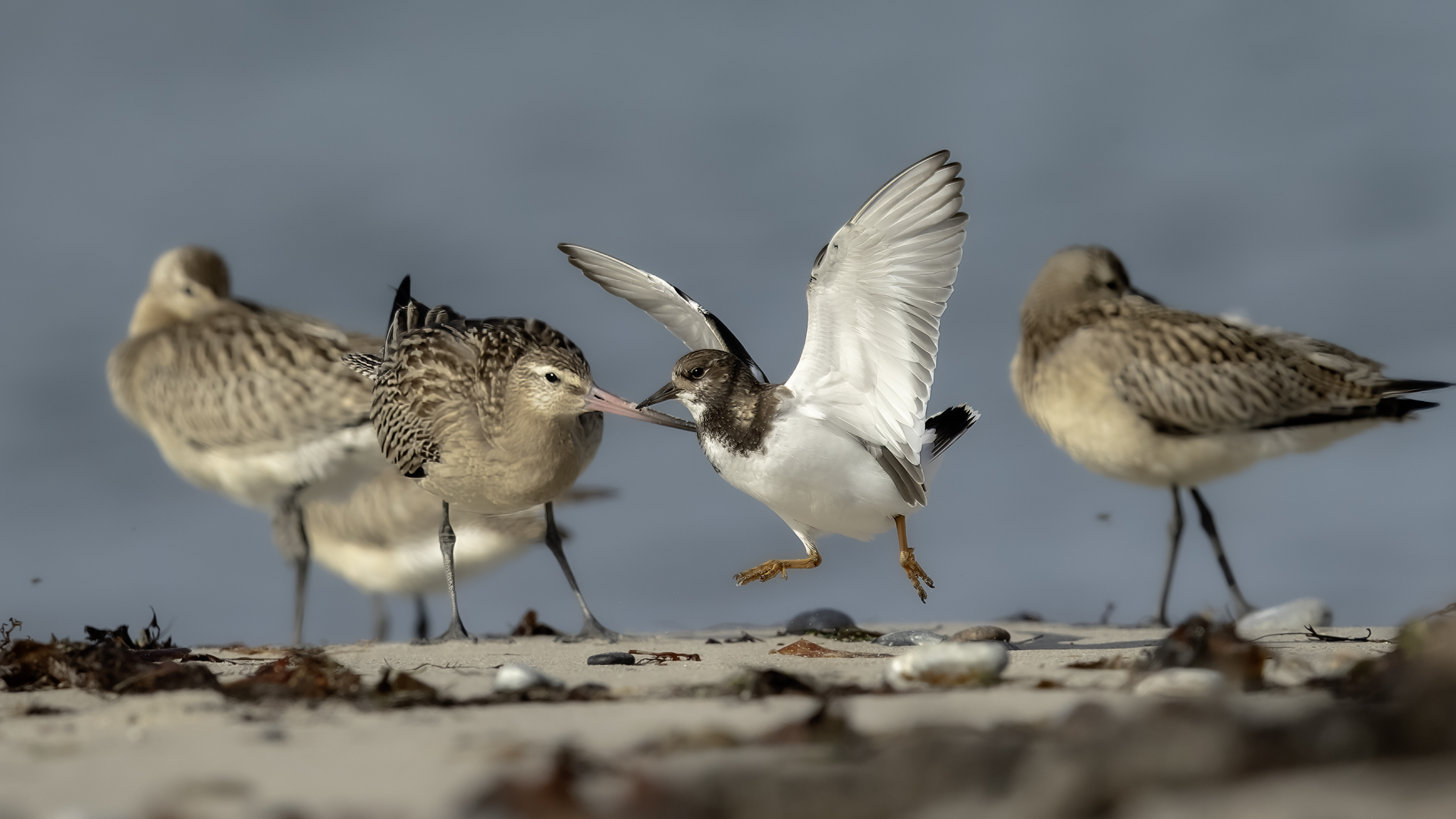
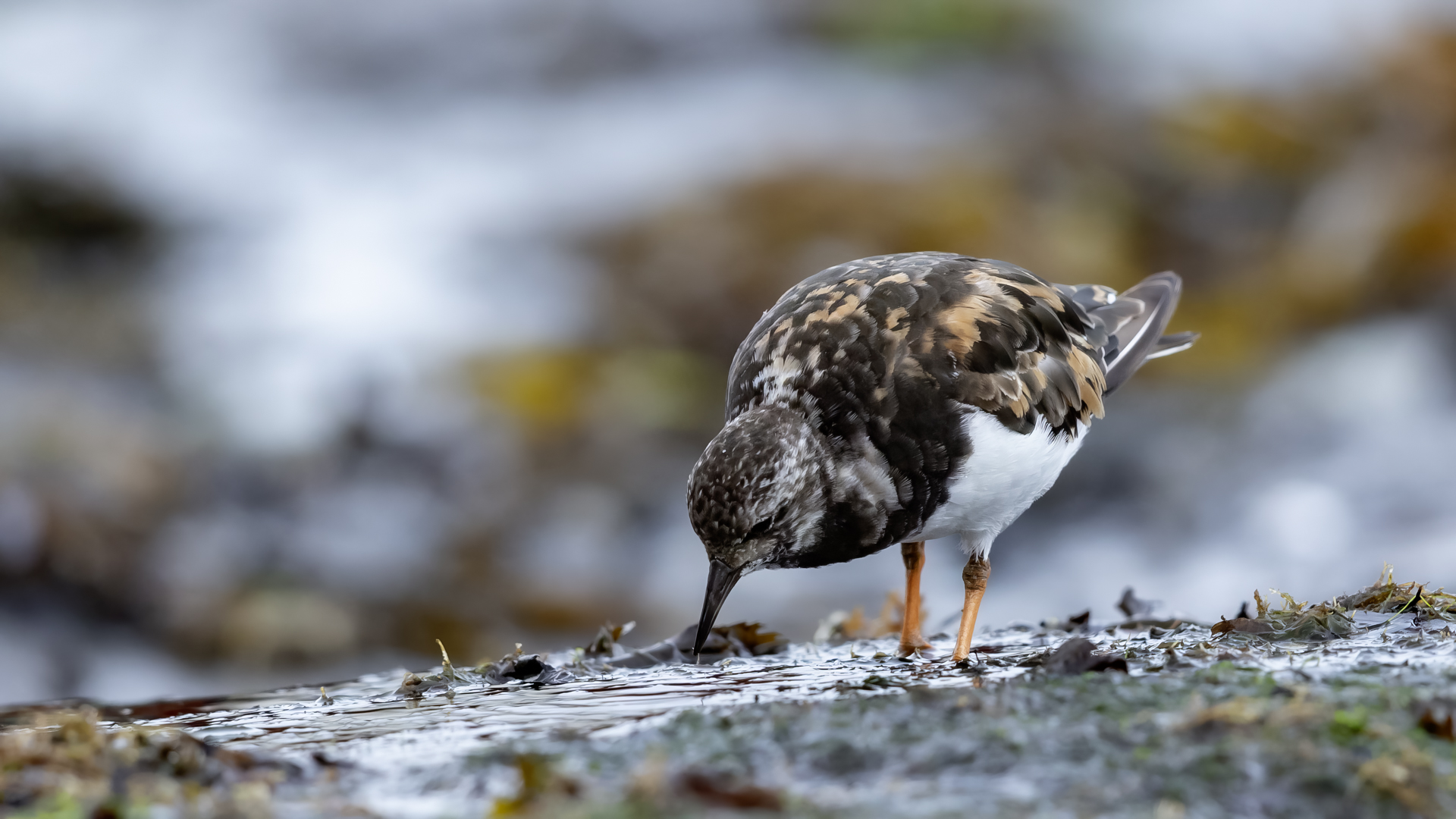
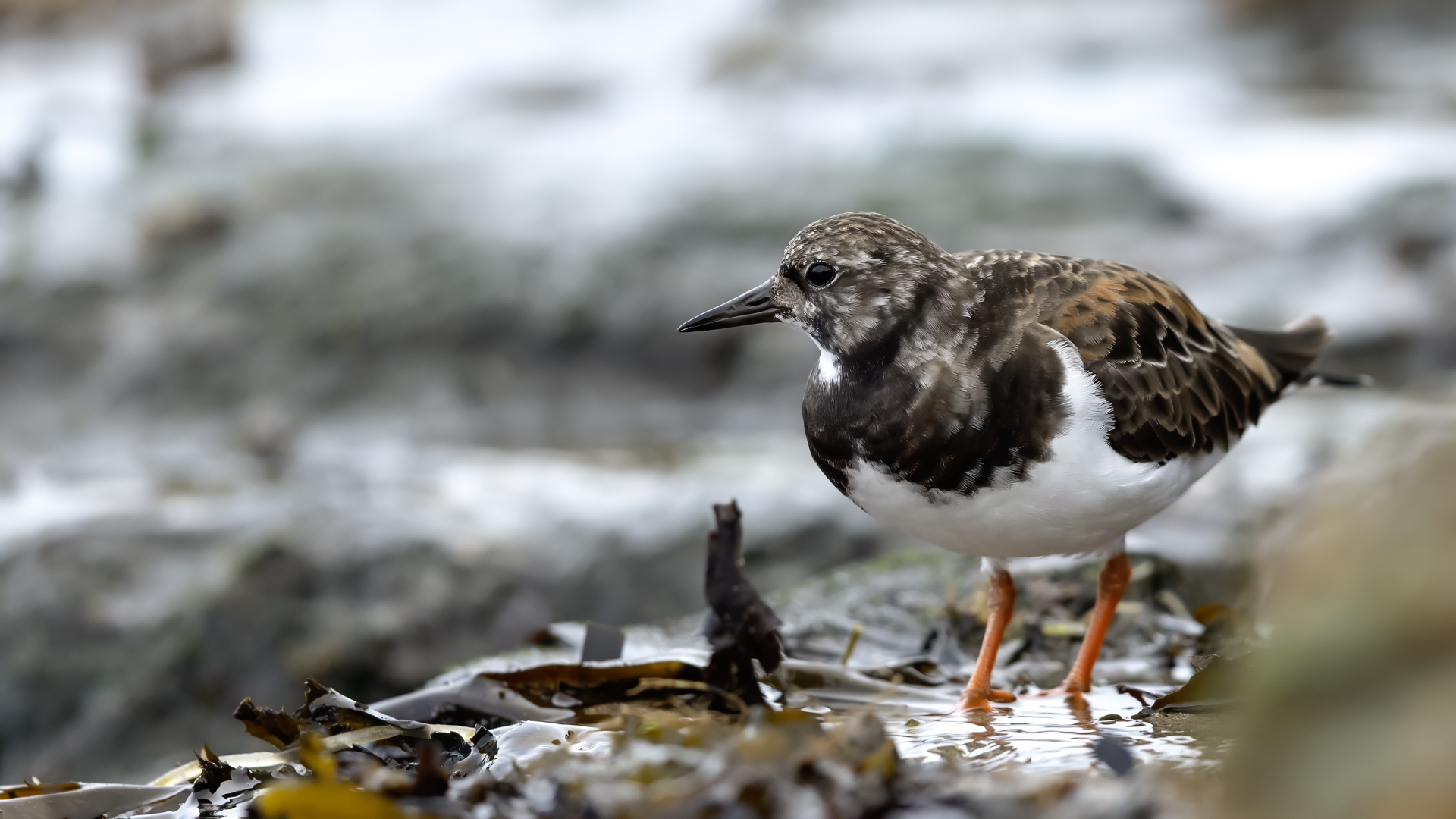
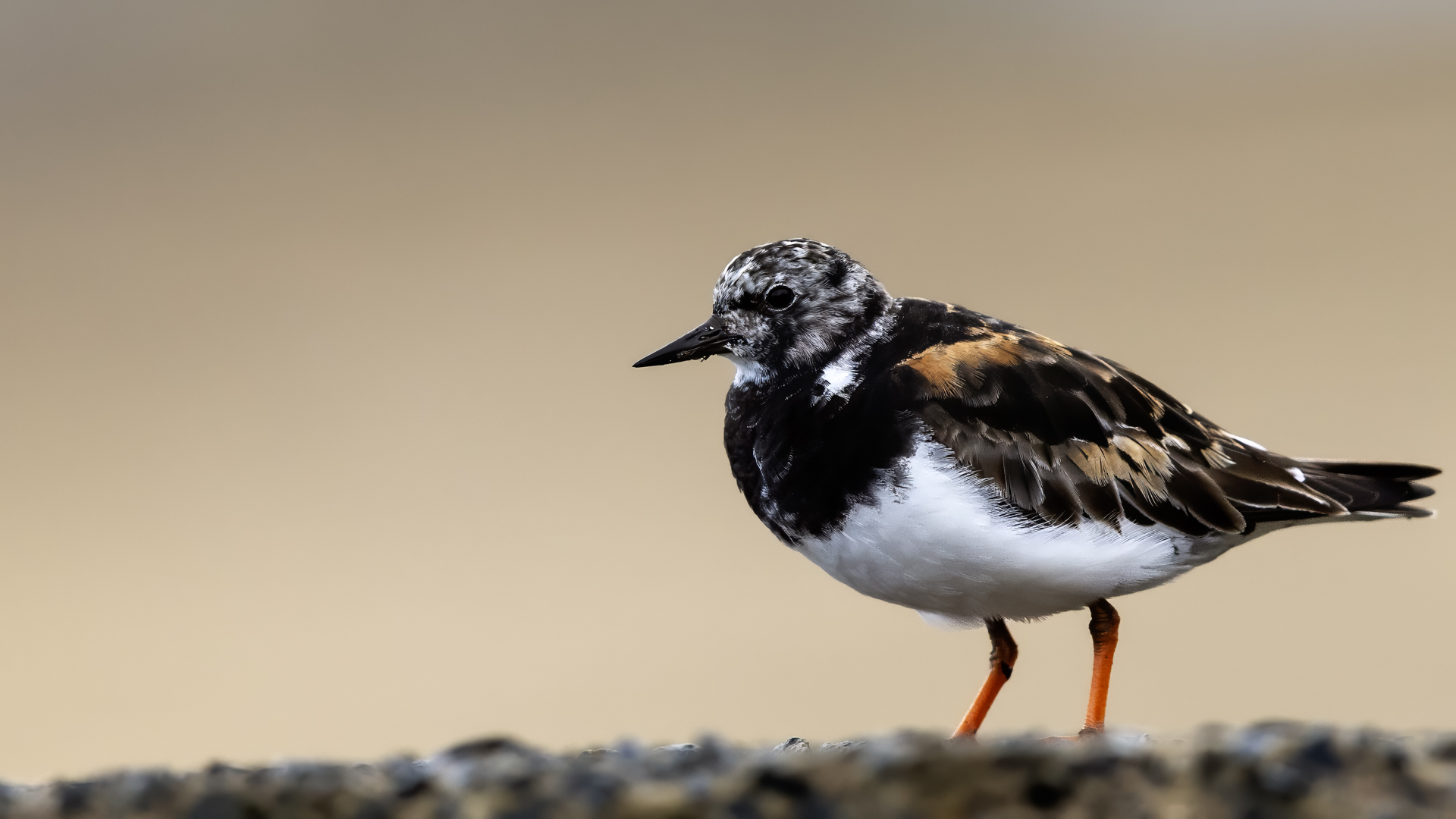
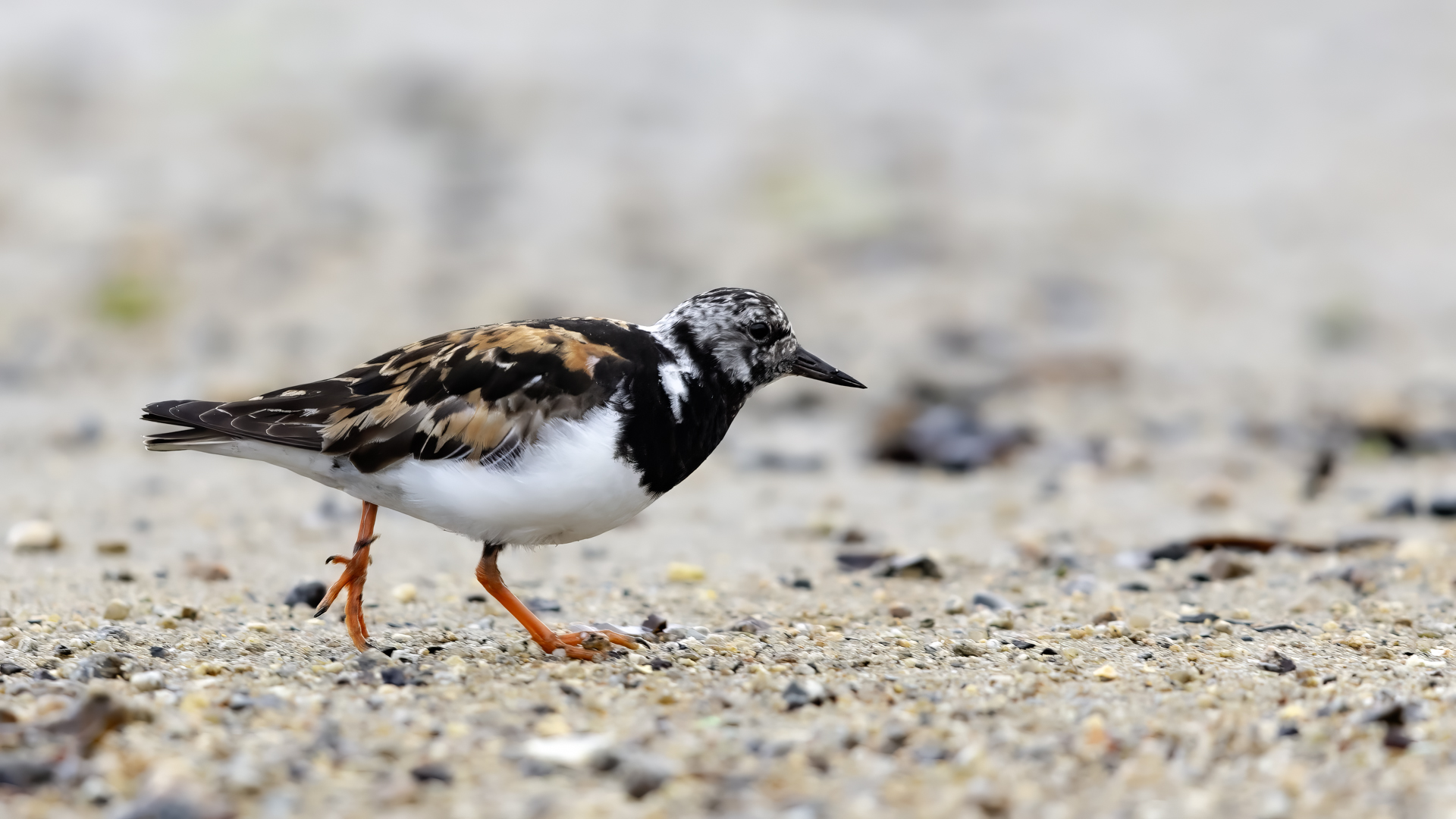
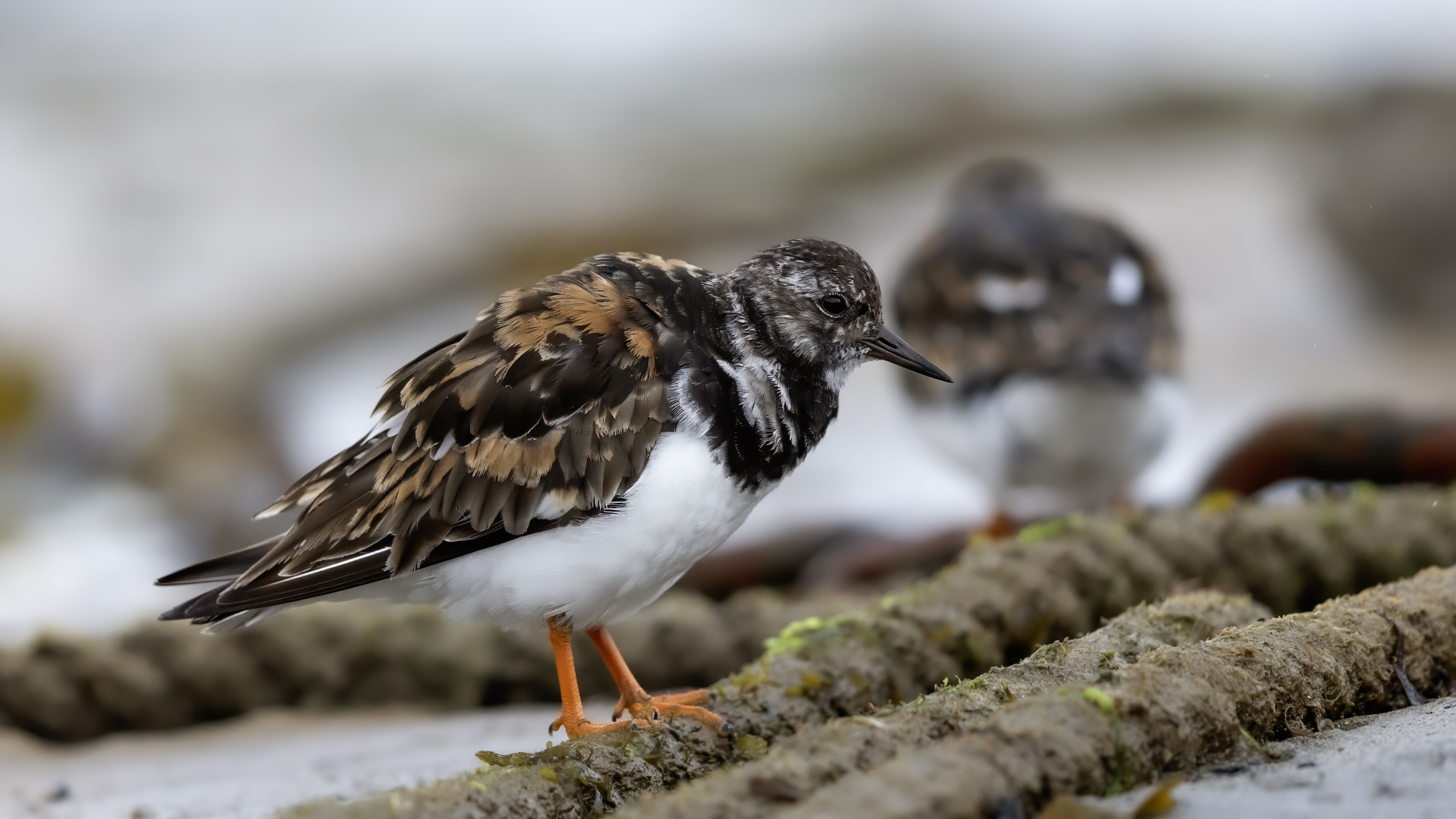
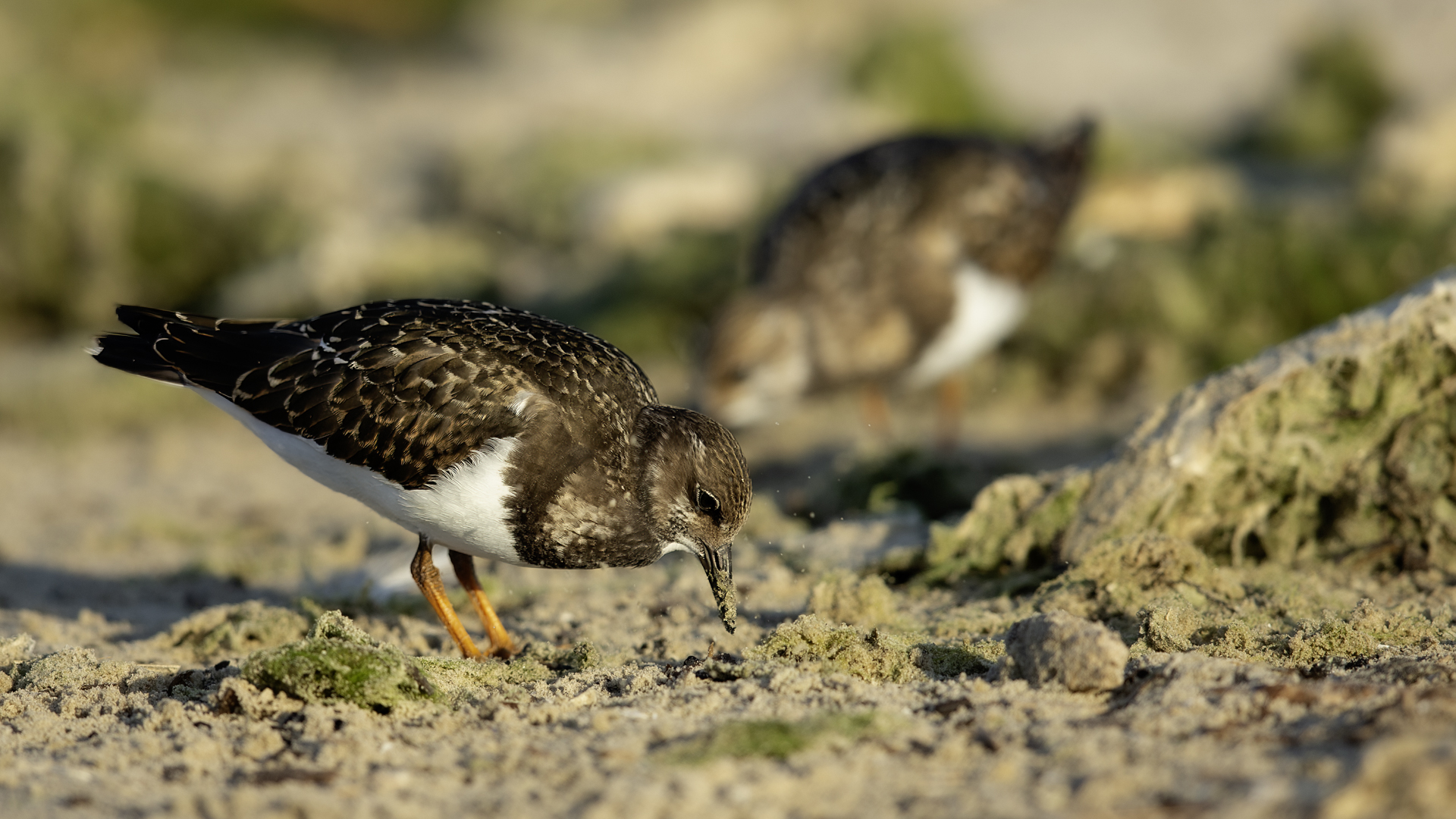
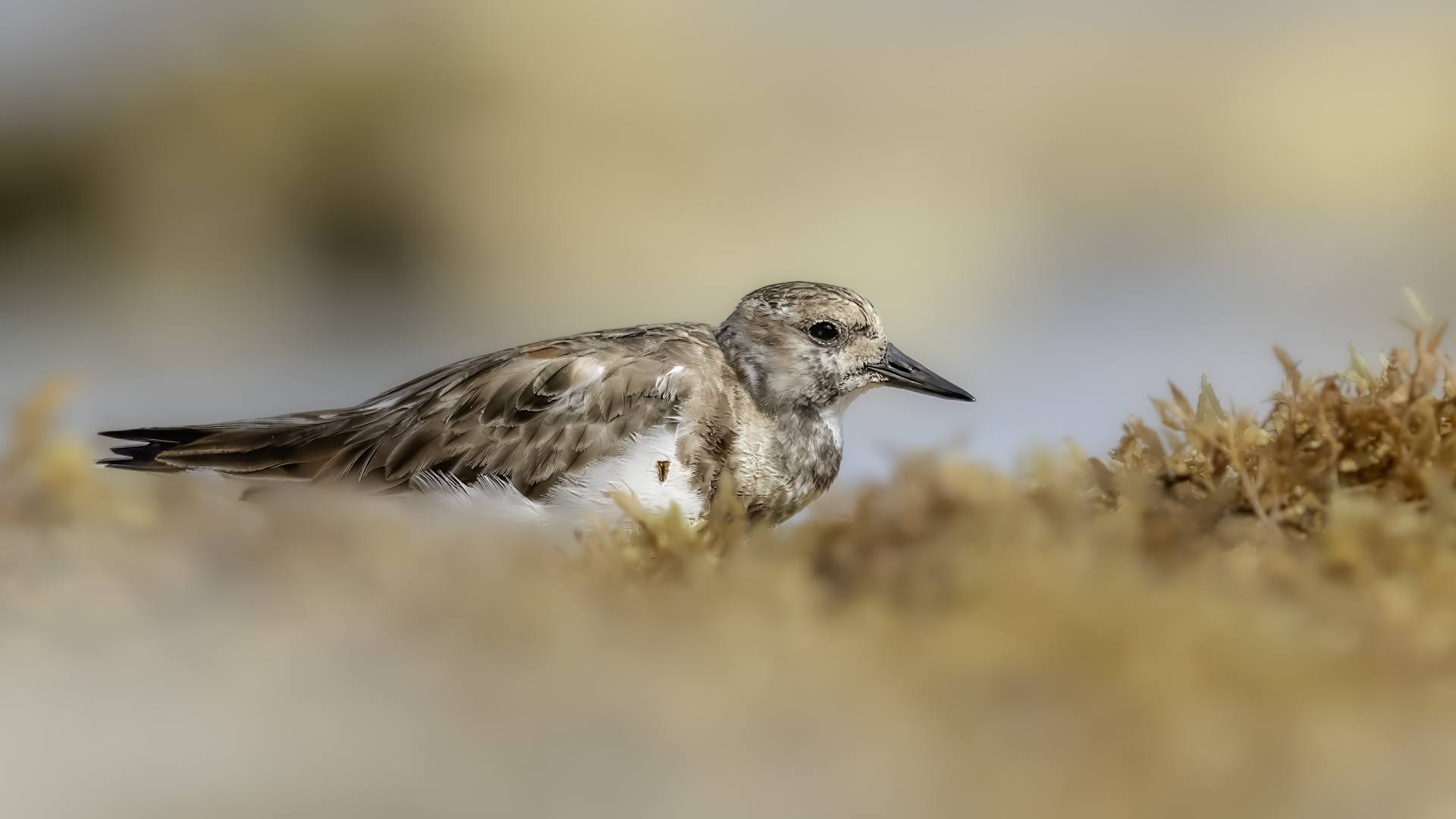
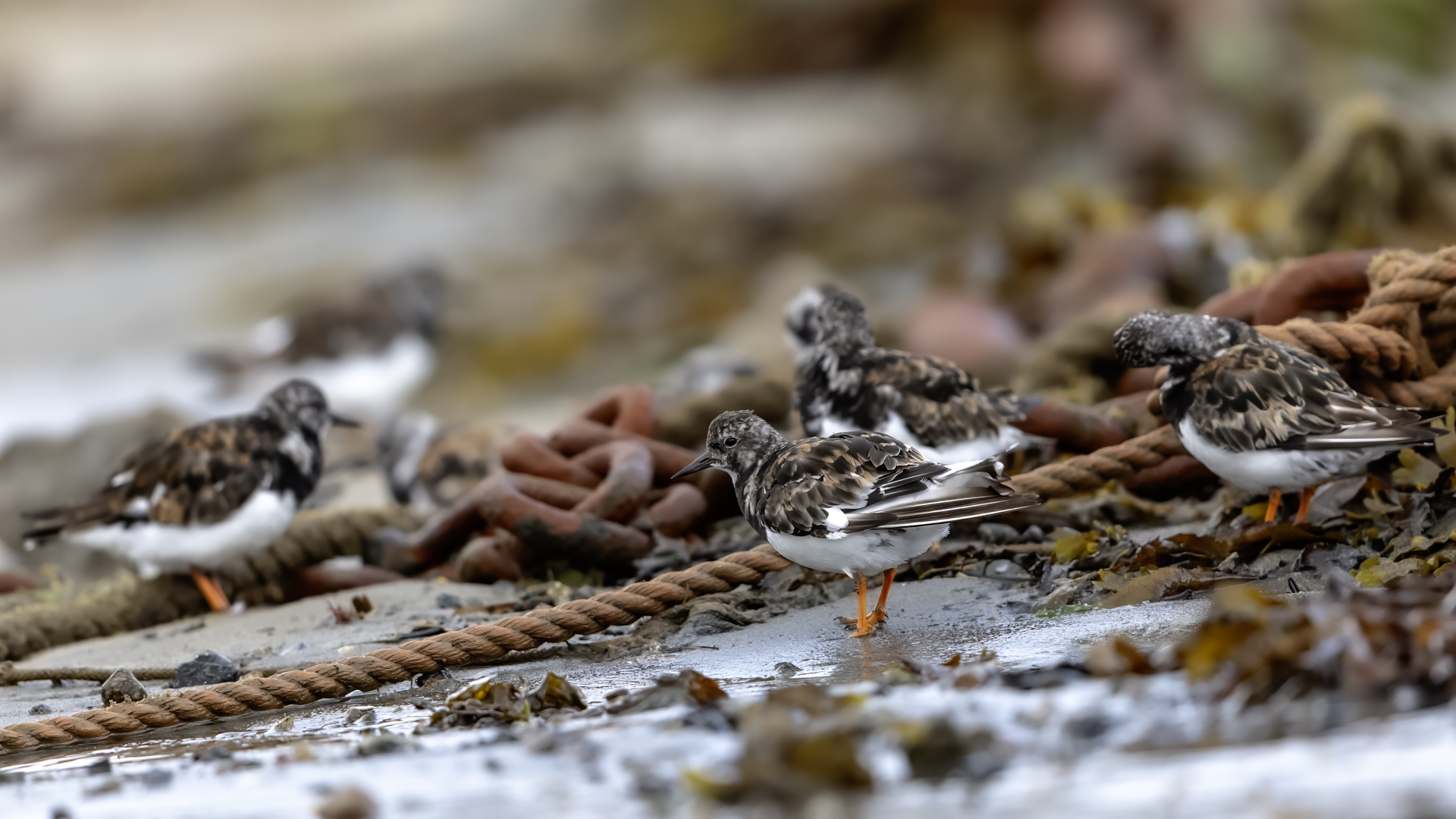
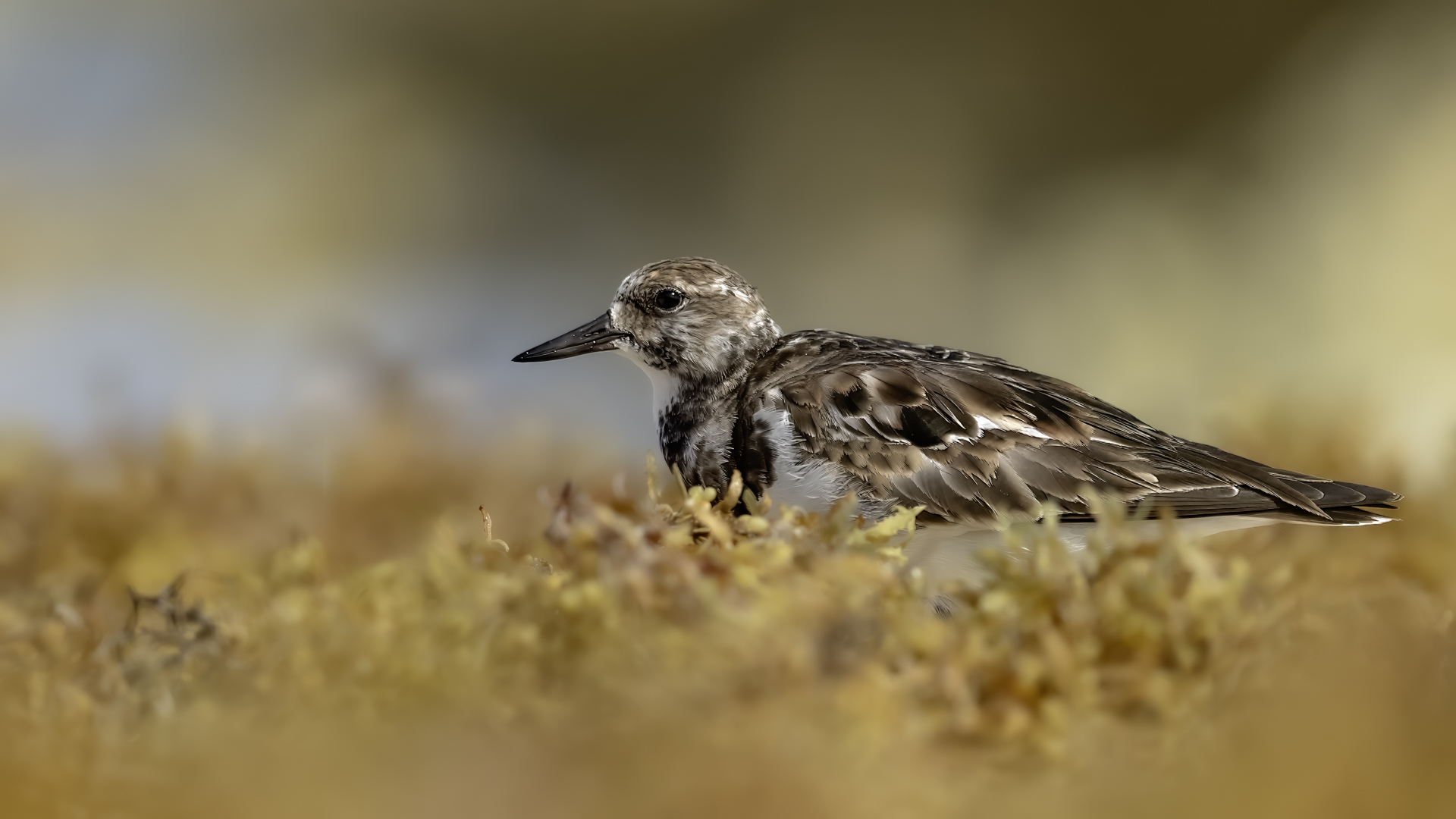
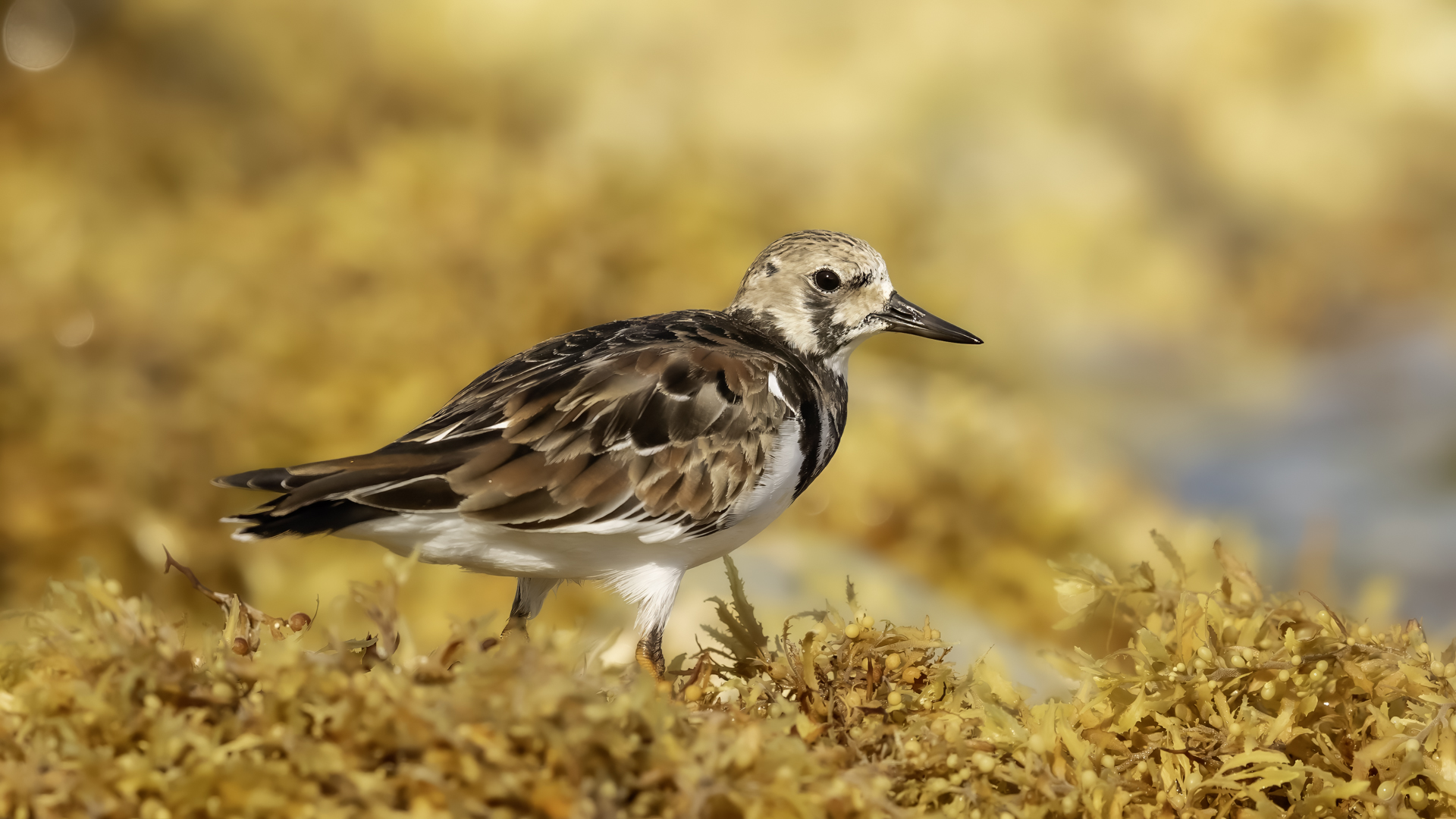
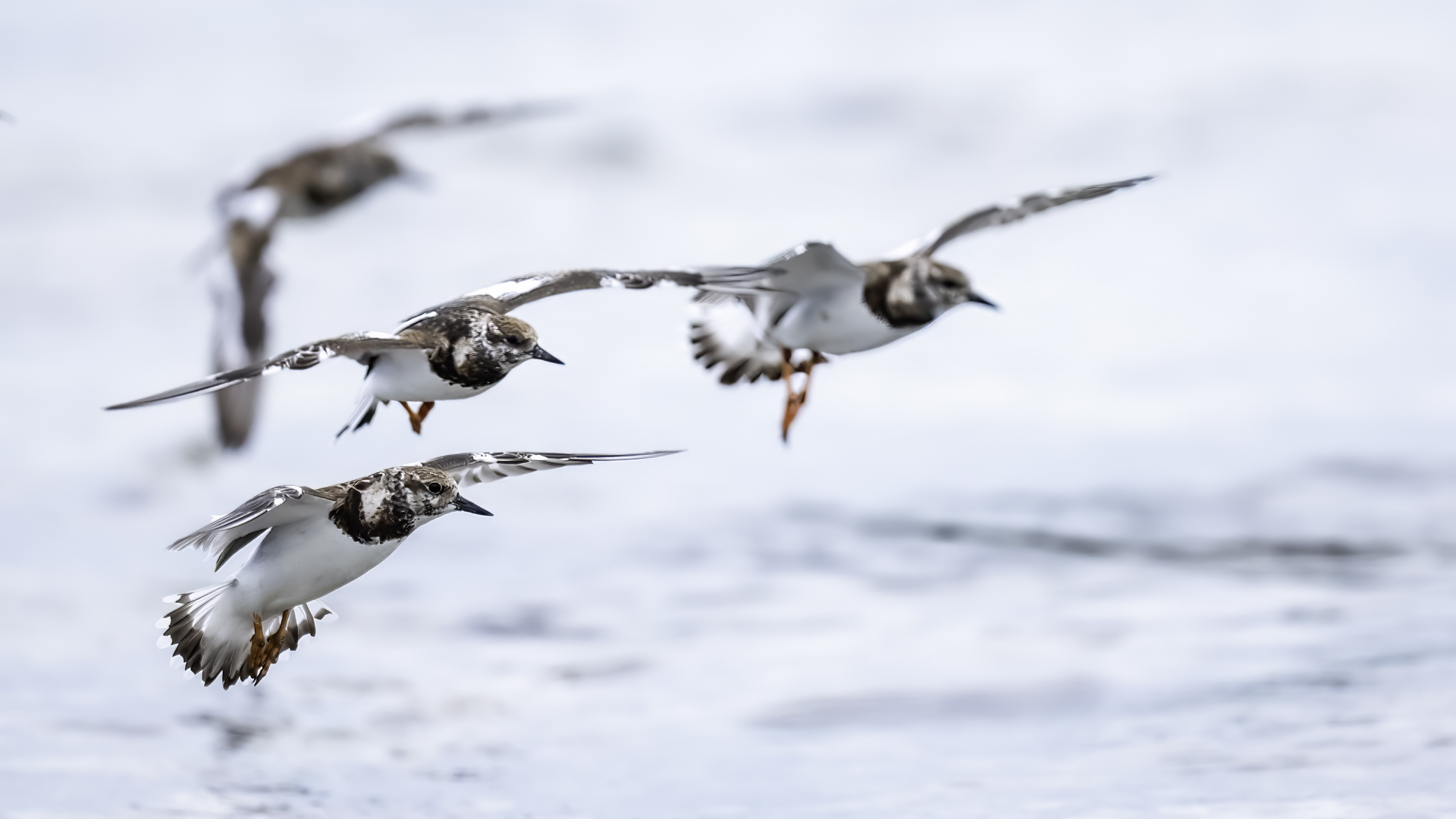
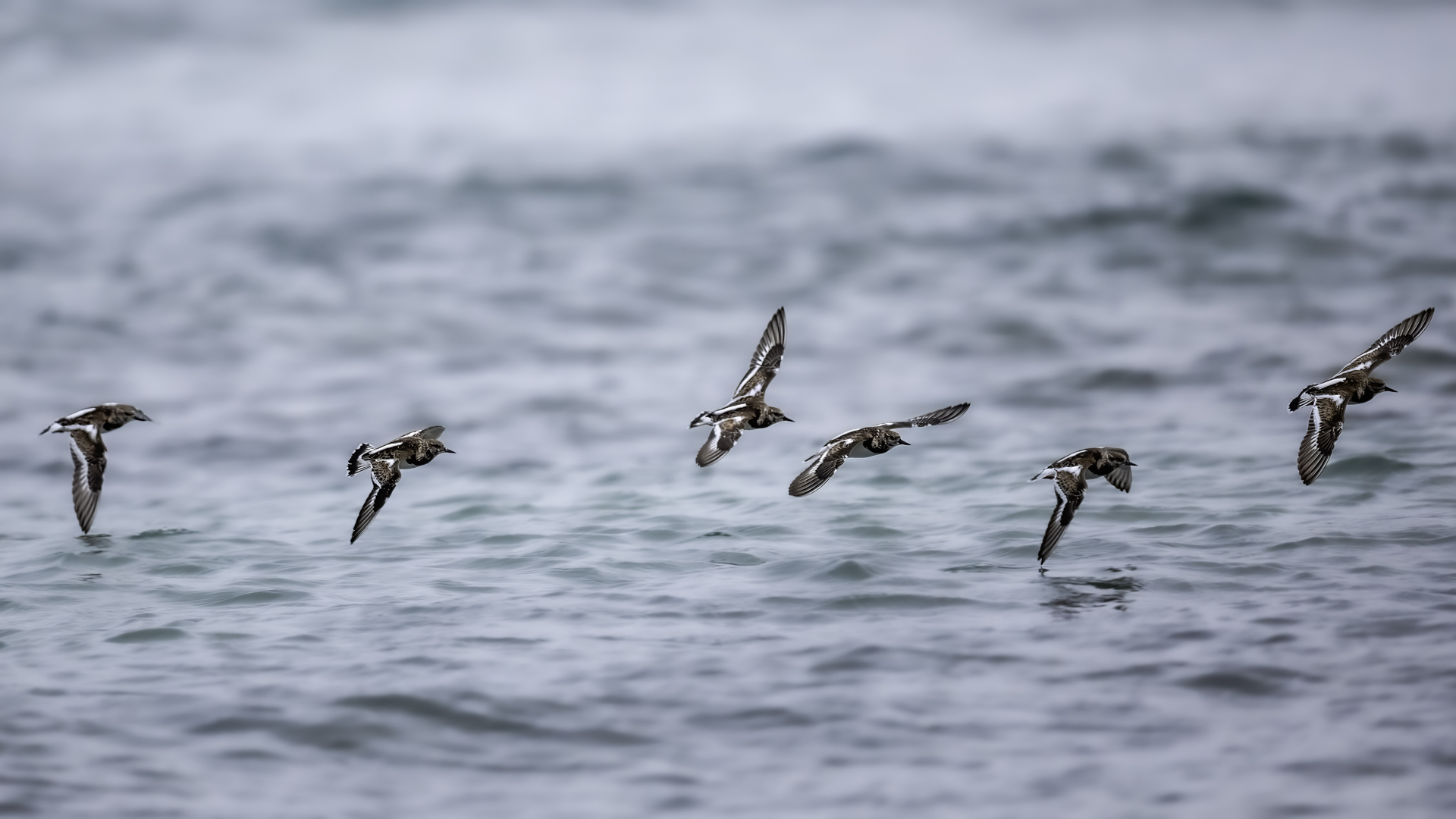
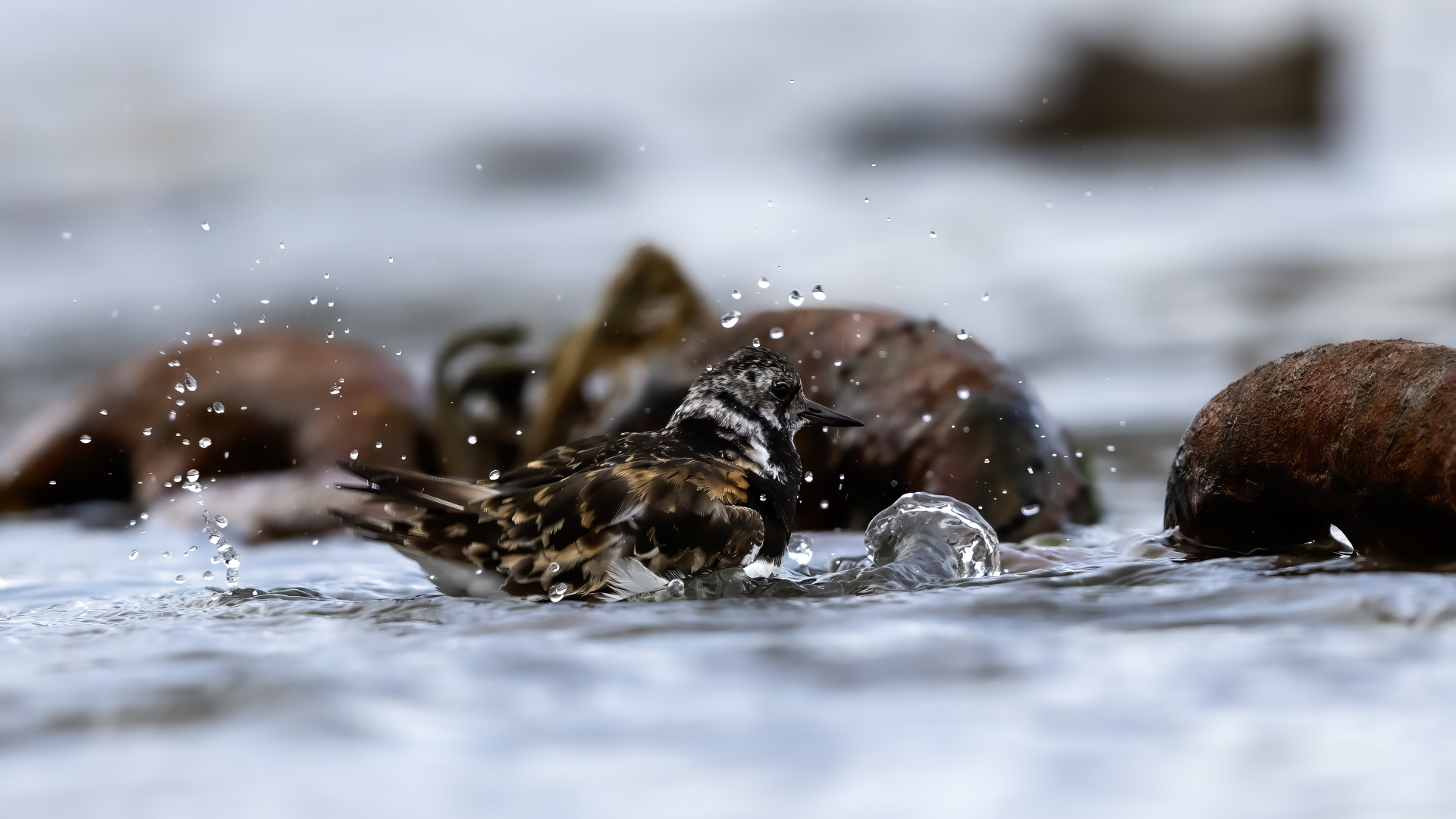
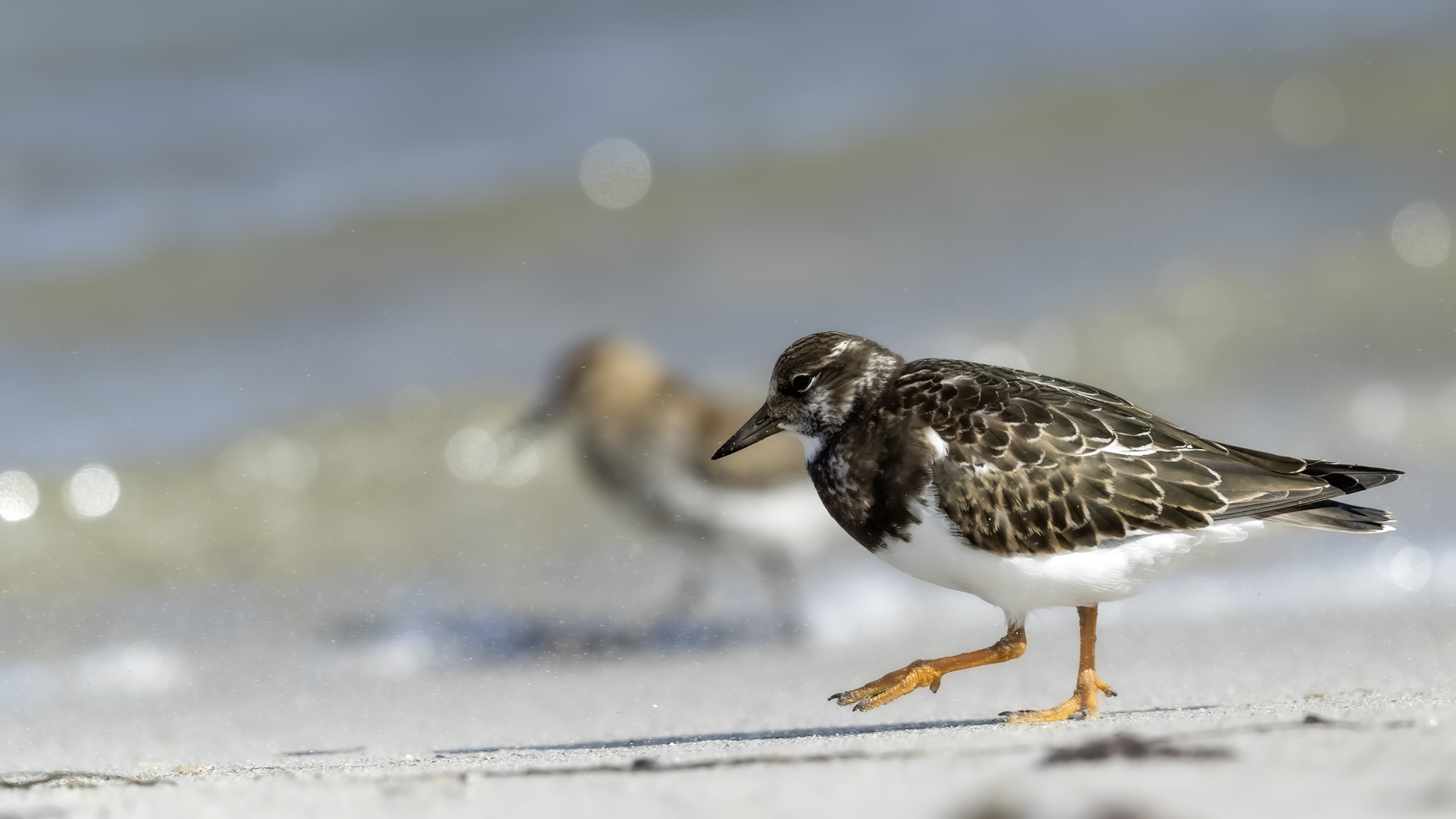
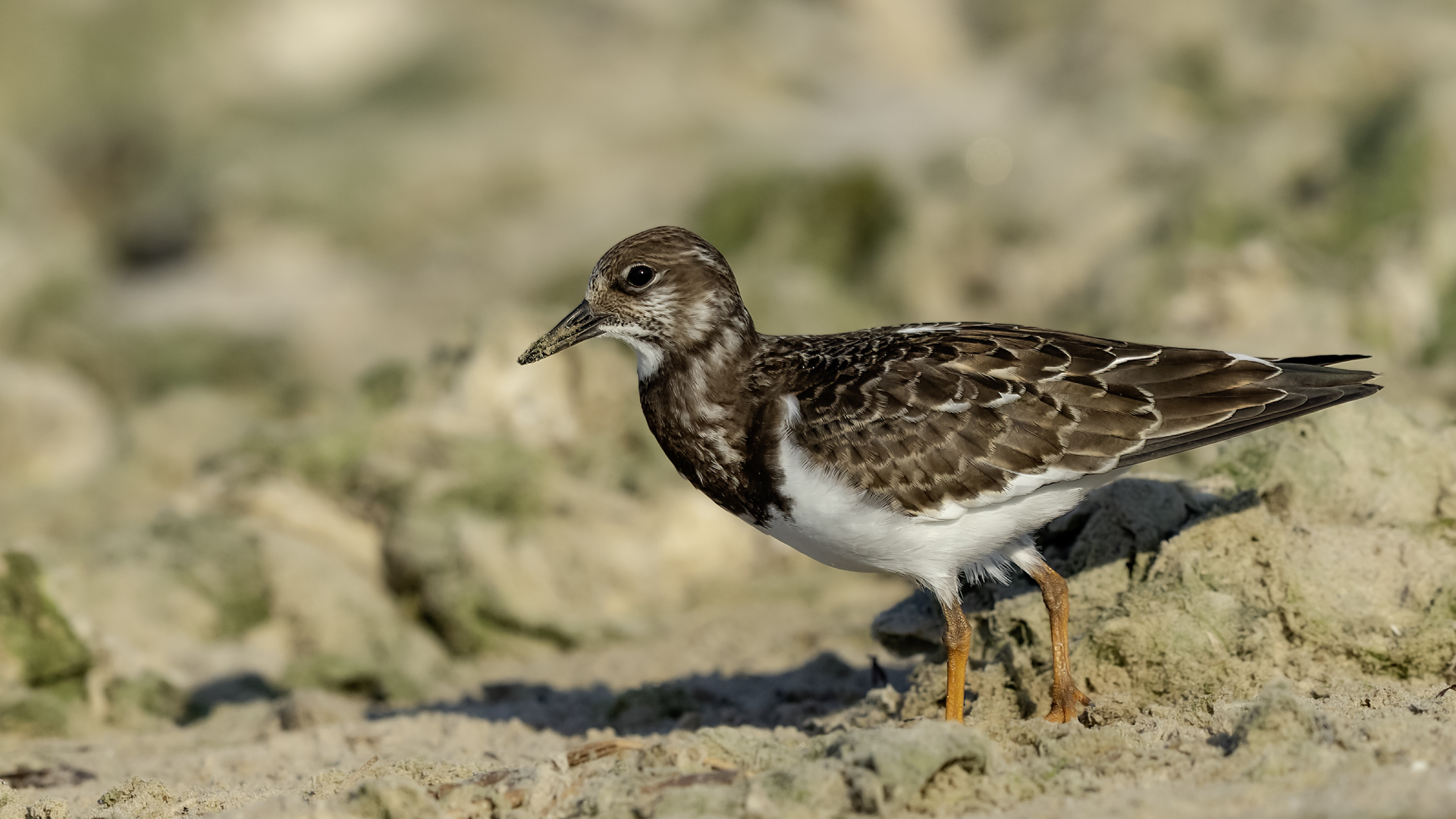
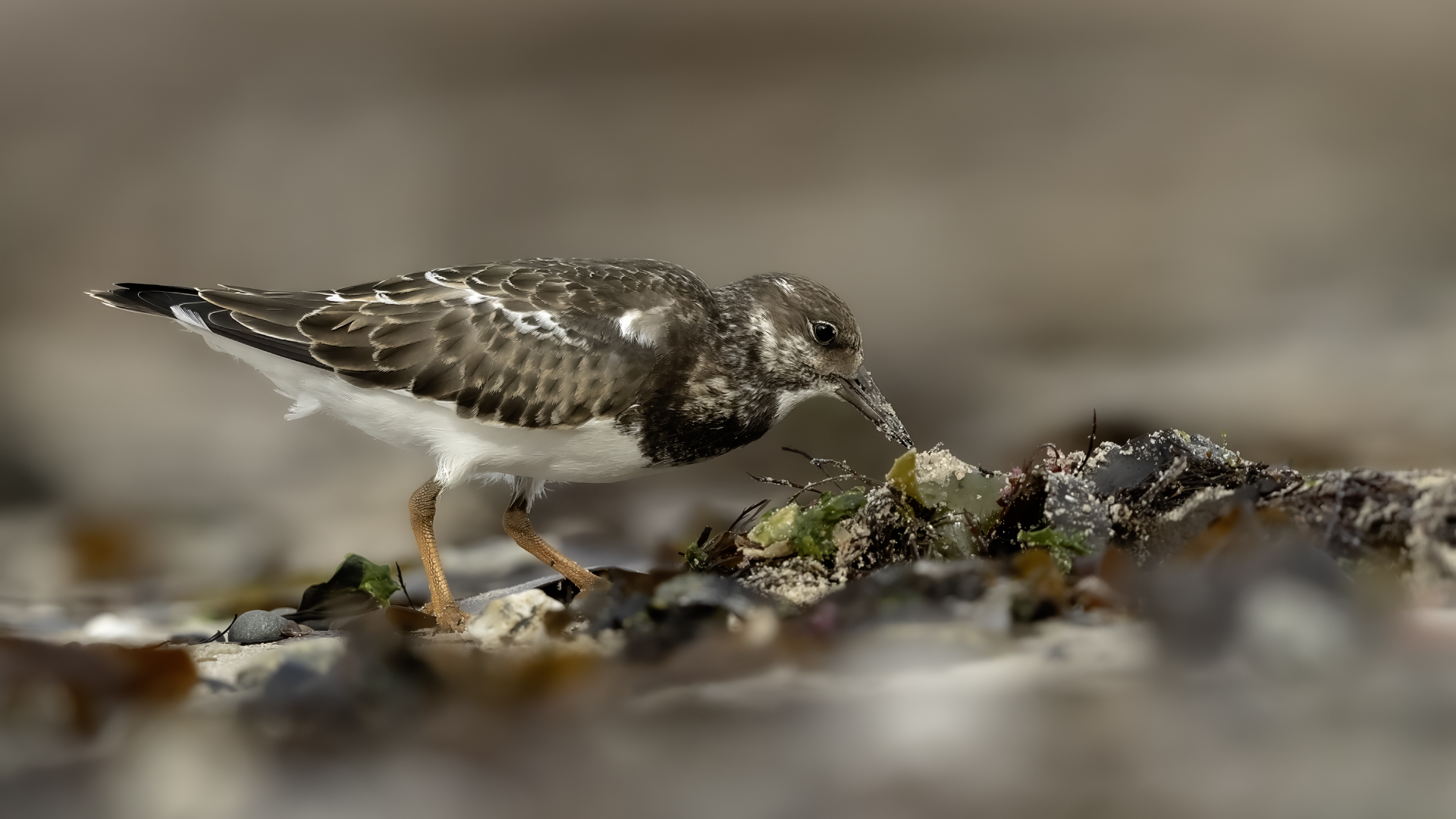
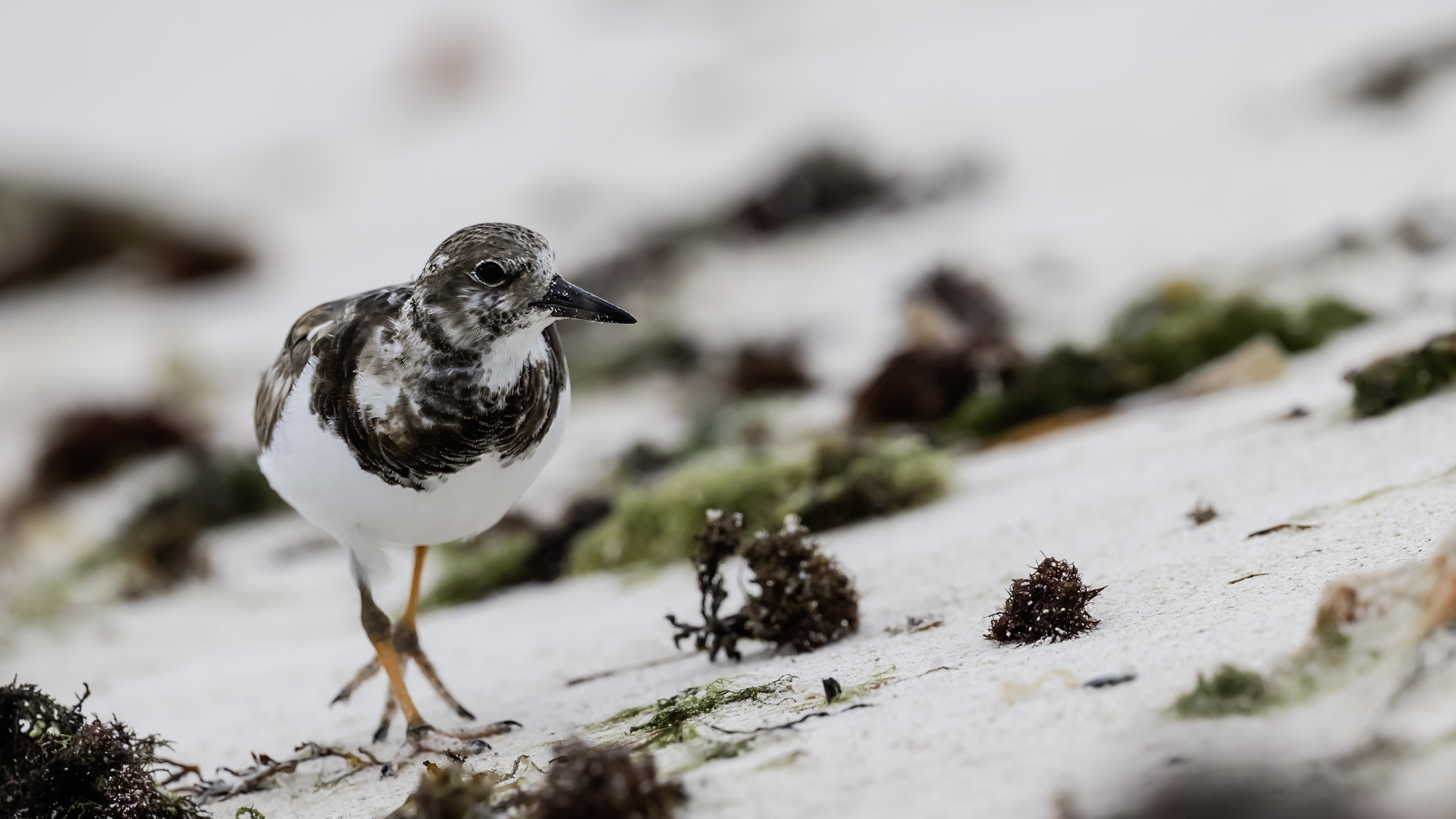
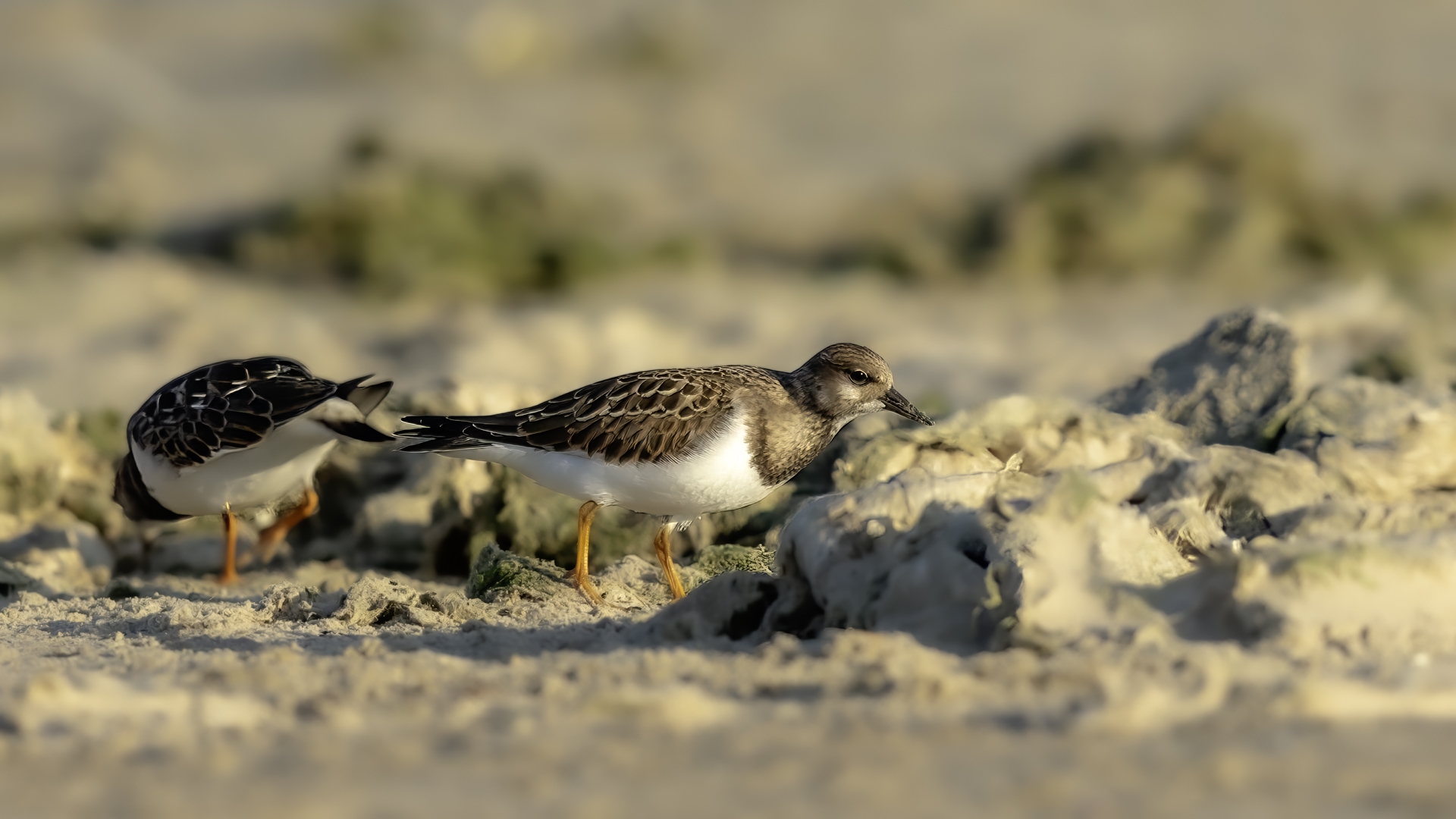
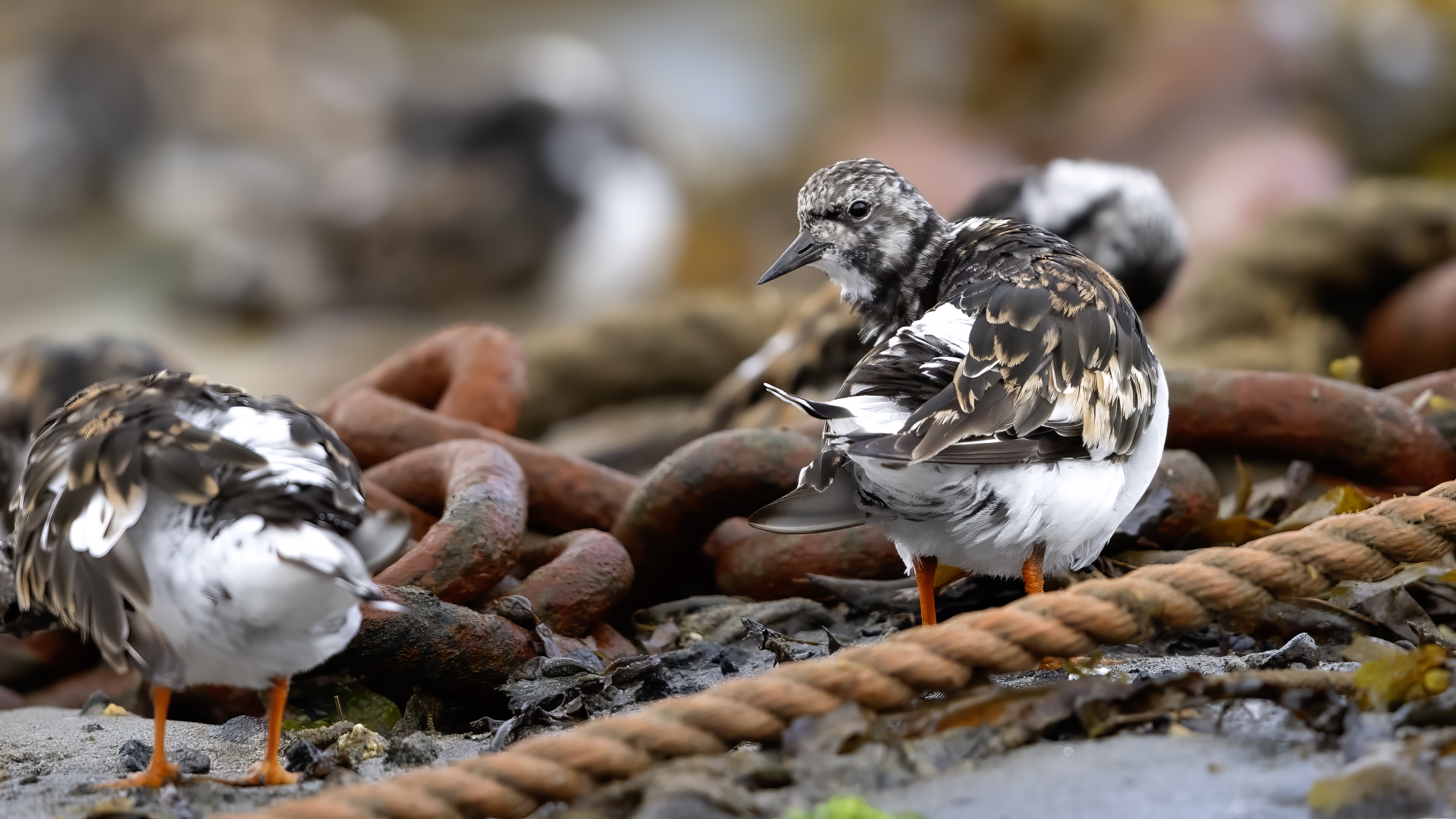
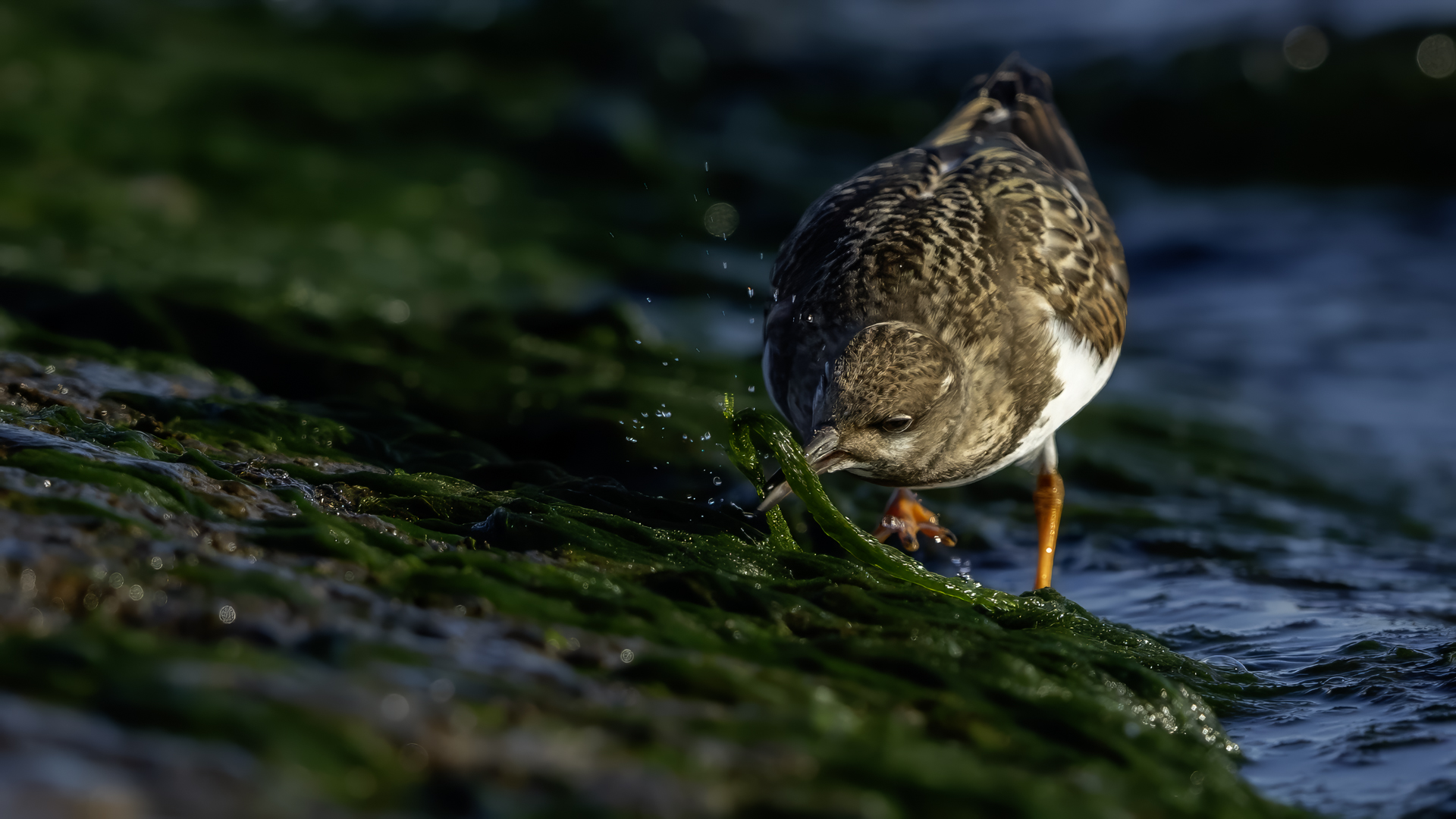
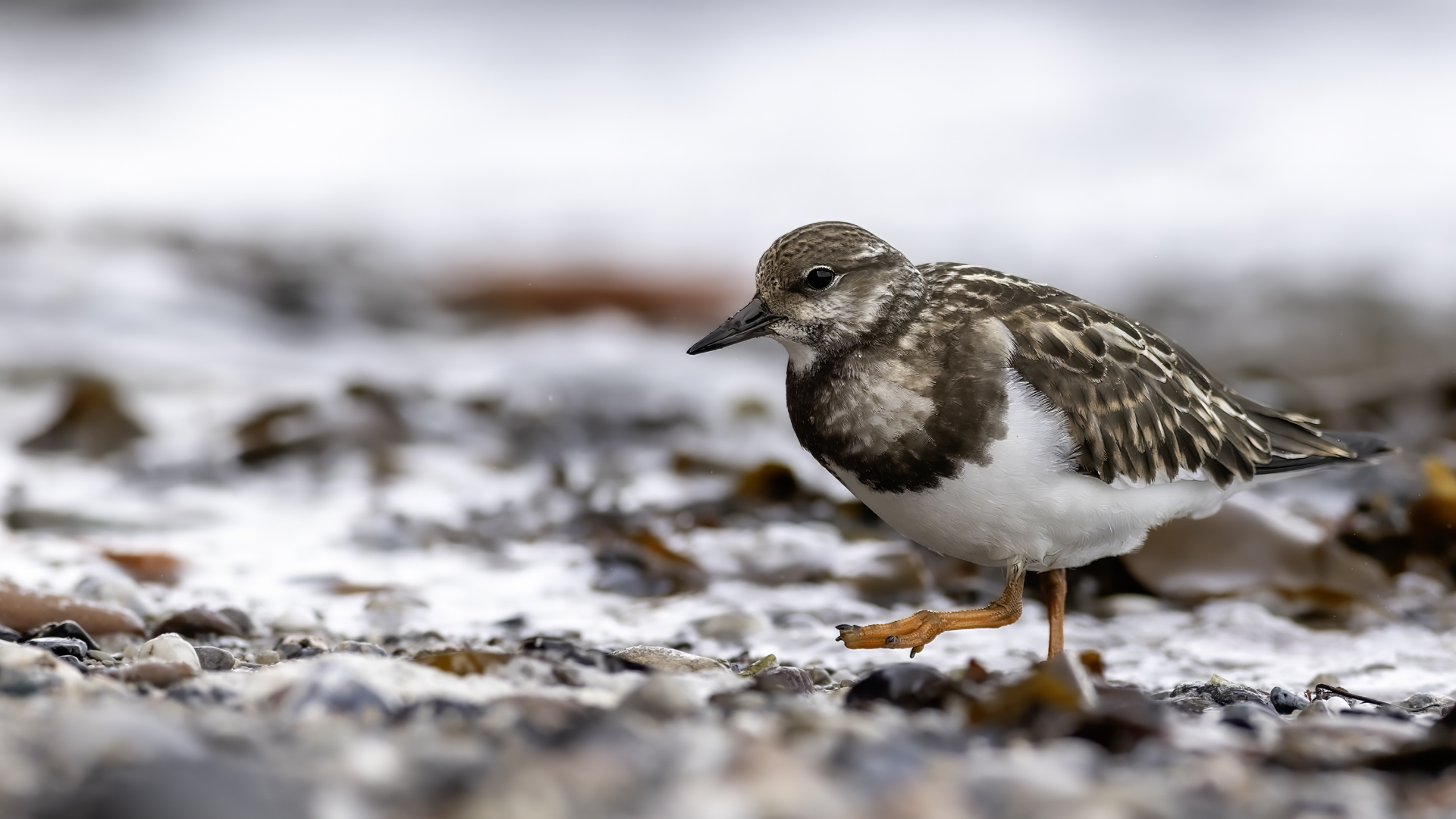
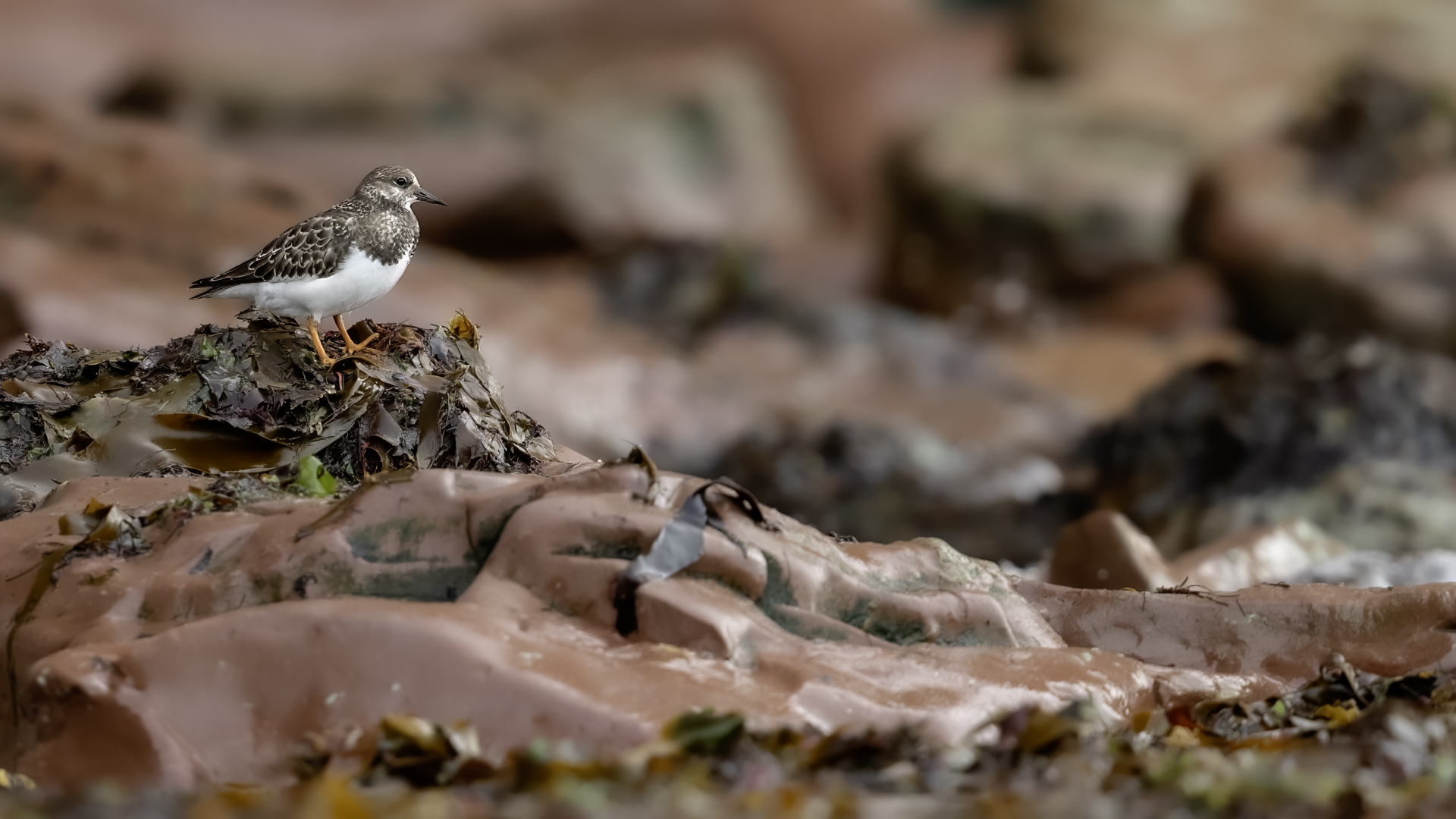
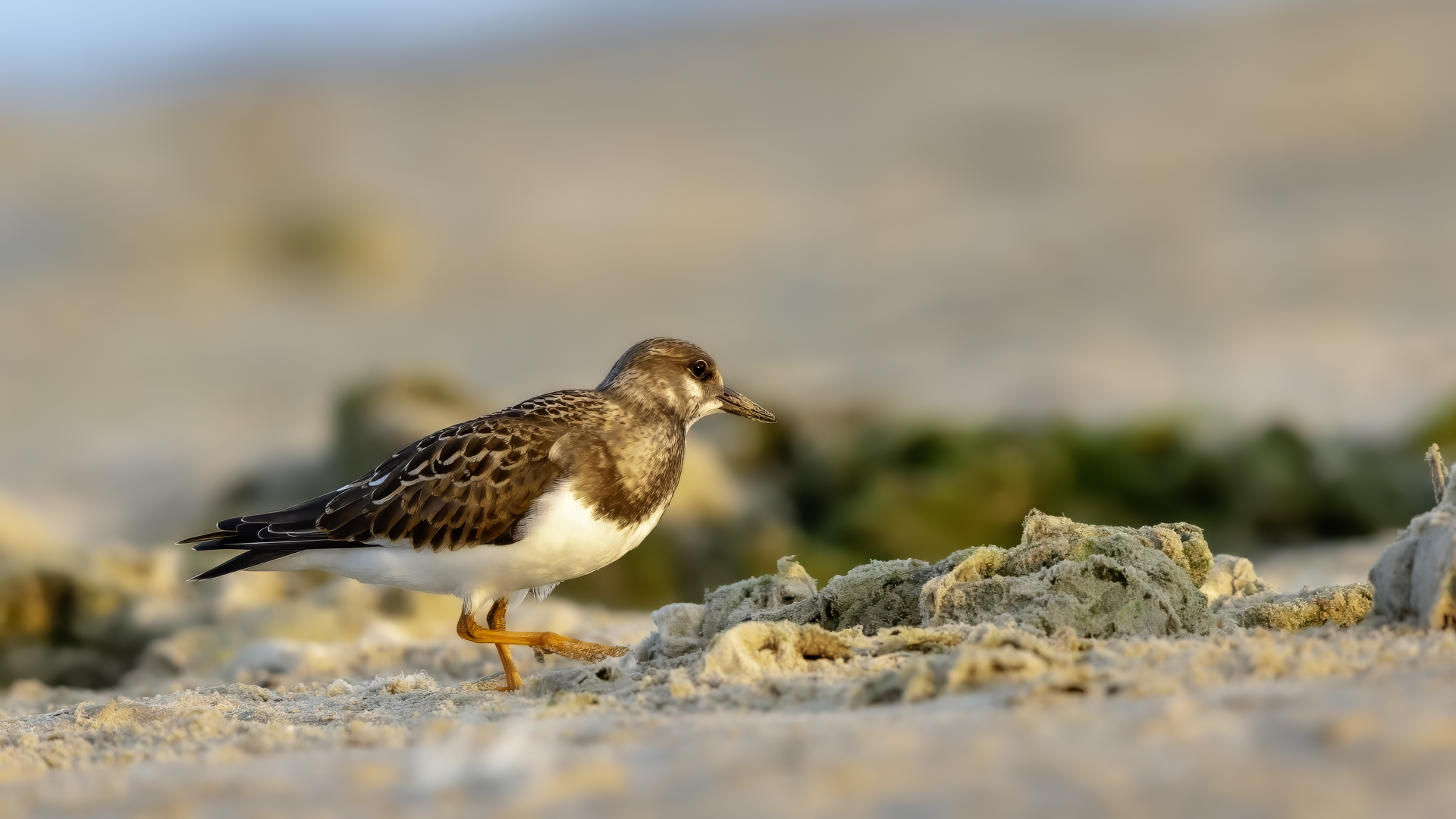
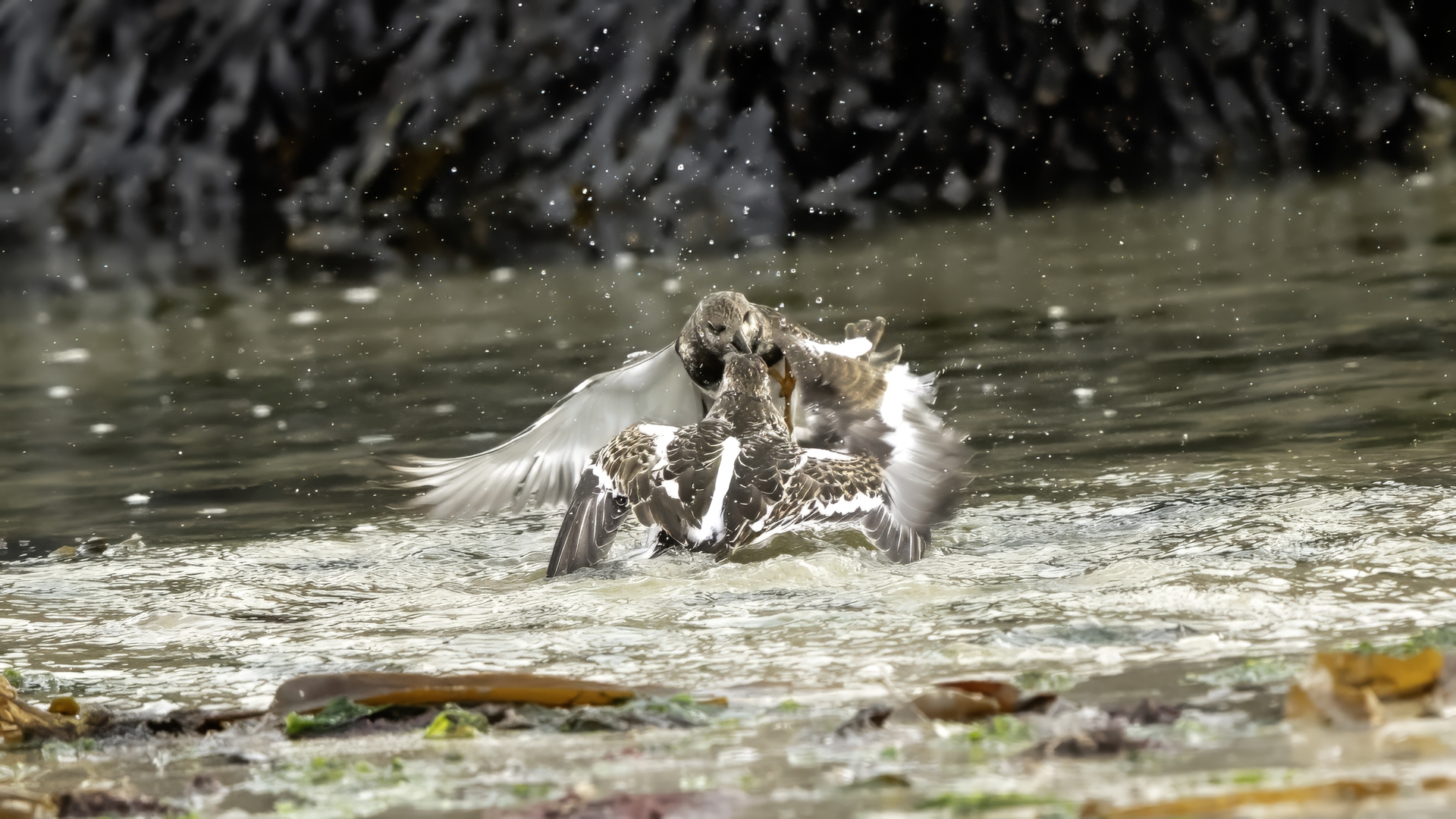
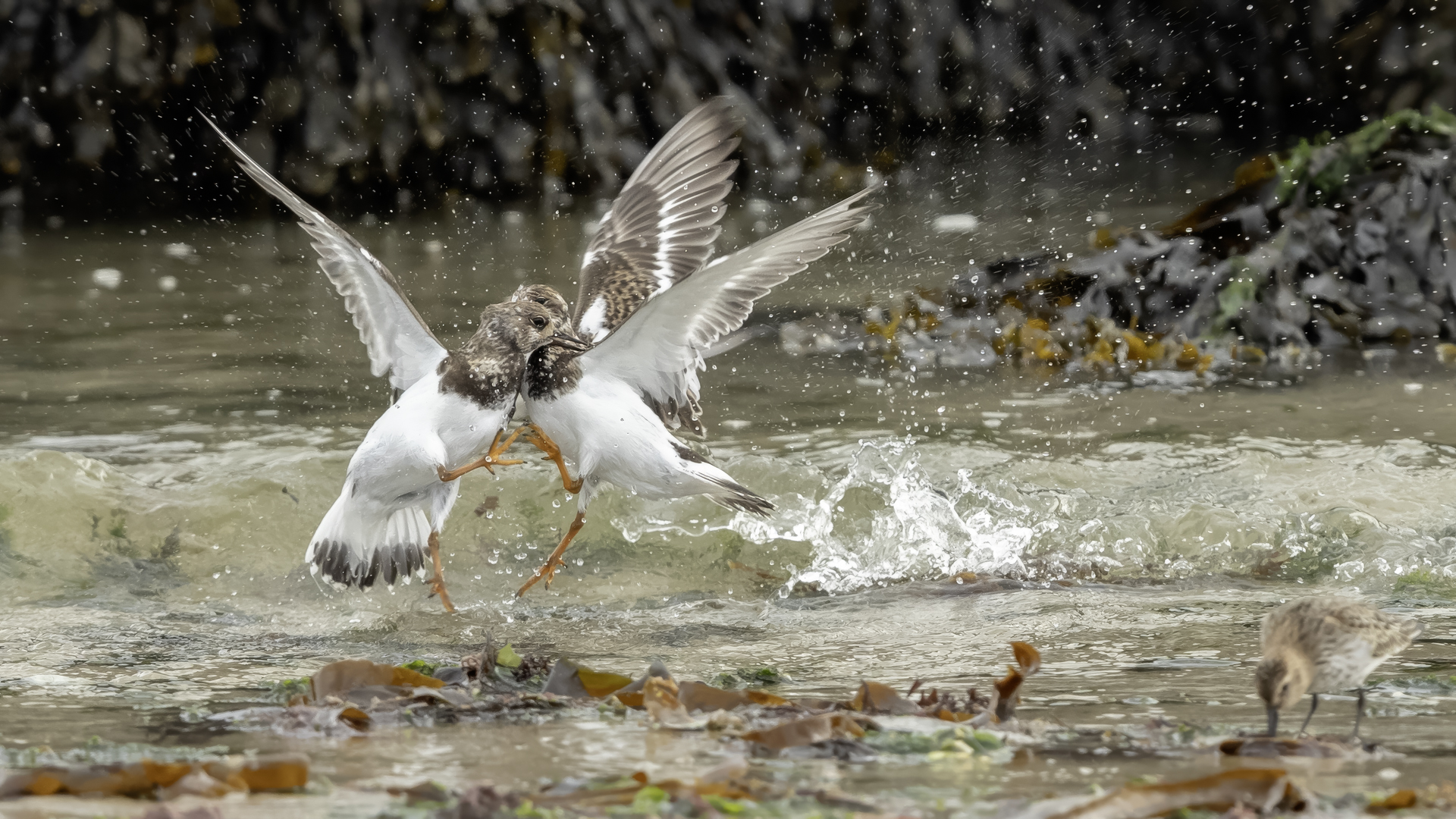
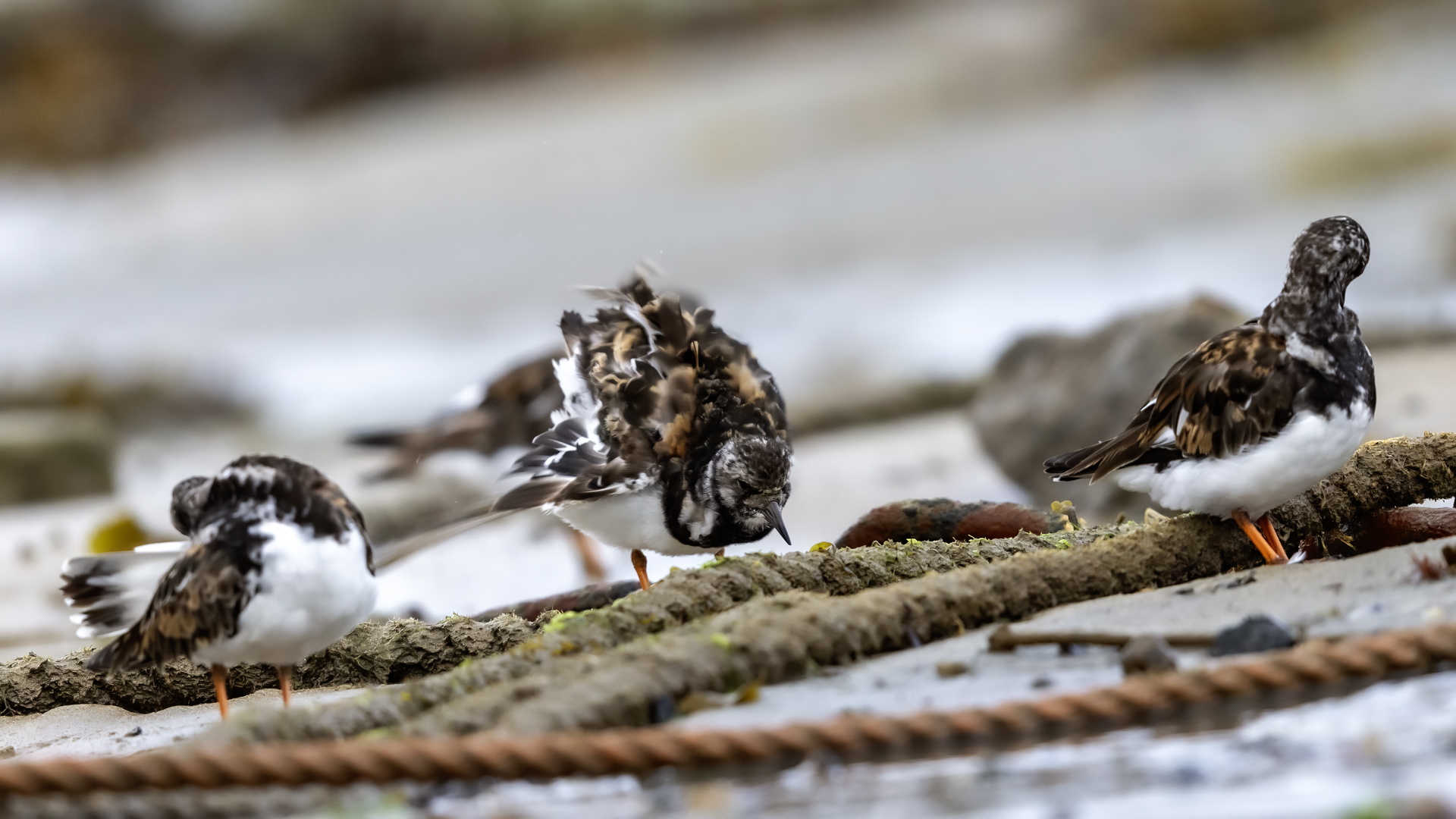
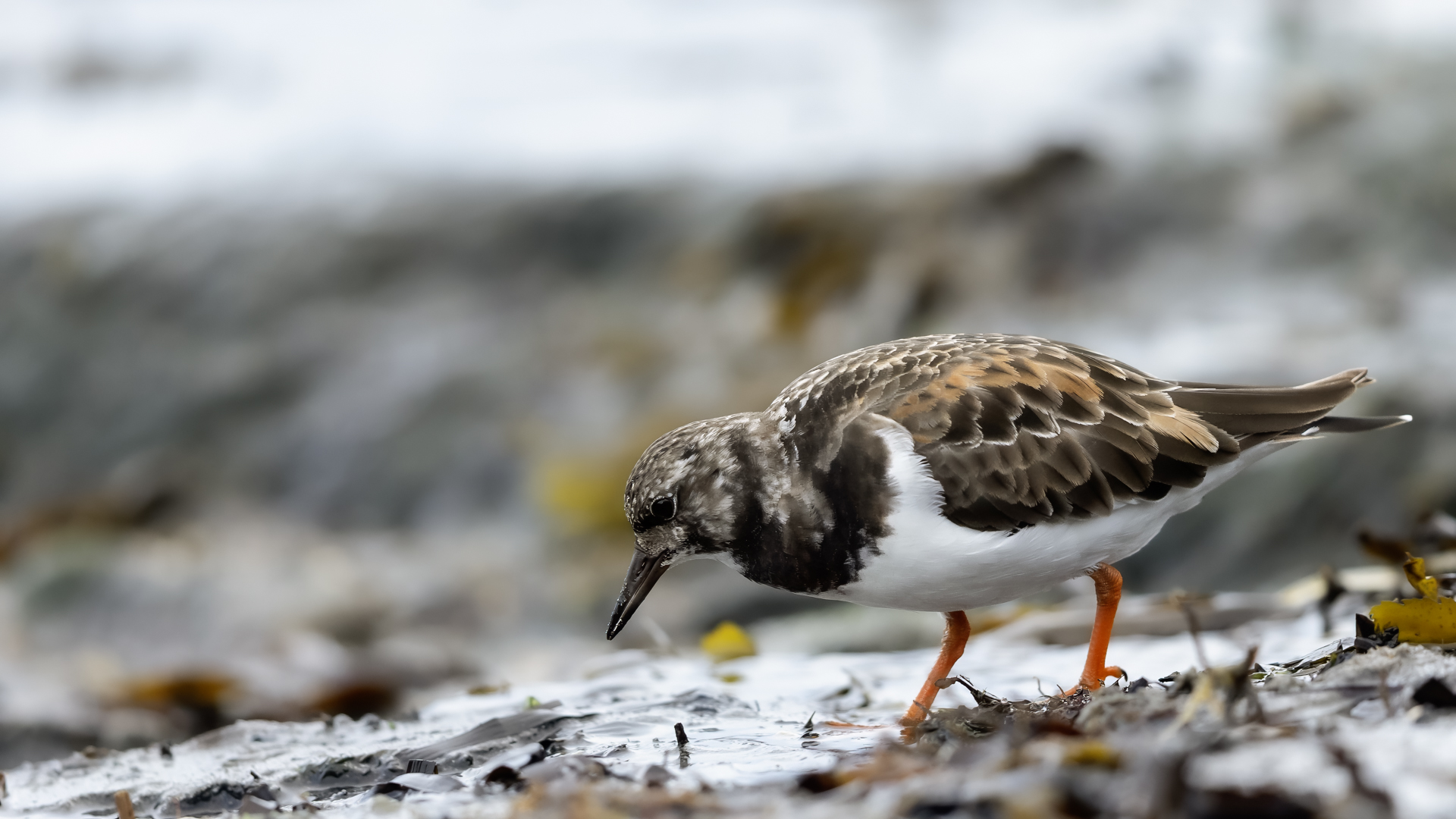
I admit that when I was getting up at 5 am in August in Swinoujście to go to the seaside with the camera I was quite skeptical about what I could photograph. The holiday season in a place like that means people on the beach practically around the clock. But without trying I will have no pictures for sure. When coming to the beach I could confess my fears proved correct, even so early you could count a dozen people. A novelty for me was that when I slowly approached closer to the plants thrown out of sea during the night I could see a cluster of tiny birds feed on the leftovers. It was surprising that they accept people walking by the sea (within few meters). Annoying thing, however, was that If I had not been there other people, particularly some older women would pass without noticing feeding birds. But if they are interesting for someone to photograph them, then they are worth taking a look at, very carefully indeed. Women passed treating me as if I were invisible and came up closer and closer, so that scared off everything that could pick up the flight. Despite my respect for the elderly, I cannot understand why they behaved like that and I do not know if it was an ordinary carelessness or malice. Anyway it wasn’t nice of them. Fortunately, the birds returned, but because of the growing number of people on the beach there were fewer and fewer birds. After 9 o’clock it was hardly anything to photograph. But never mind, the outdoors session was successful. Birds let me approach close enough to take some good photos that I could publish in the gallery. The lighting conditions at the rising sun were perfect. I was fully satisfied because of the fact that I was able to photograph the new species -dunlin, red knot, turnstone and ringed plover. Not only the new species but also of a satisfactory quantity and quality. Too bad that the ringed plovers soon abandoned this place because of the walkers. It is a long time I have not not managed to take pictures of the representative of the genre, and they aren’t satisfactory either in quality or shots. This comment will be common for photos added to the gallery in August, during that session. There are several reasons. The most important fact is that the whole session lasted several hours when birds were continuously disturbed, and as a result I was waiting and waiting for them returning. In such conditions, it is difficult to tell stories about the natural behavior of the species. Just like with the sounds of birds. Although the microphone was turned on all the time but after listening you could only wring your hands, or better ears. There was recorded everything, apart from the sounds of birds. The sounds of the port, the ships, walkers’ conversations, dog barking ... It is a pity, even far from perfection sound but recorded on my own is better to listen in correlation with pictures of the species than downloaded from another source of sounds. Short description, sound, photos, it's almost a movie, complete report of communing with nature. My diary. But it is not a market. What and how we can capture is always a lottery. This time the effect of several hours’ activity, without camouflaging, couching was stunning. Welcome to my galleries: Dunlin, Red Knot, Ruddy Turnstone and Common Ringed Plover. At the end of my comments I have included data describing the bird of each species to have an idea of its size. As for a turnstone I know that I was able to photograph the bird that in Poland can be seen only in passing. Northern parts of Europe and Asia are its breeding grounds. Wintering in North Africa and the western coast of Europe. Turnstones weigh 100-180 grams, with a wingspan of about 50 cm.
Last minute news 08/2015
During the expedition to the Atlantic Ocean to see the procellariiformes I had an opportunity to photograph the ruddy turnstone. The birds were feeding quietly on a small beach by the hotel I stayed in and I could take interesting pictures at sunrise. They were still in breeding colours, so the photos I took introduced diversity to the existing gallery, which was reconstructed.
Last minute news 06/2016 - Mongolia
Last minute news-03/2019 – Cuba
Last minute news- 09/2020  Heligoland – Germany
Last minute news- 09/2021  Heligoland – Germany
Last minute news-03/2022 Mexico
Last minute news-01-2025-Mexico
Last minute news-10/2025-Peru

ANGLIA - j. ANGIELSKI

Mongolia - wykaz j.ANGIELSKI

Body

Mongolia - introductory text - Pallas's sandgrouse
Birds-new galleries:
1. Pallas's Sandgrouse (T,V),2.Himalayan Vulture (T)3.Pallas's Sea-Eagle.(T)4.Demoiselle Crane(T).5.Upland Buzzard (T). 6.Siberian Scoter (T).7.Rufous-tailed Rock-Thrush (T).8.Saker falcon.9.Golden Eagle.10.Azure Tit (T,V).11.Horned Lark  (T,V).12.Red-billed Chough (T,V).13.Mongolian Lark (T).14.Mongolian Herring Gull (T,G).15.Bar-headed Goose (T, V).16.Amur Falcon (T,V).17.Rock Sparrow (T,V).18.Pine Bunting (T,V).19.Desert Wheatear (T,V).20. Merlin (T).21.Isabelline Shrike (T).22.White-crowned Penduline-Tit (T,V). 23.Oriental plover (T). 24.Citrine wagtail (T). 25.Greater Sand Plover (T).26.Red-crested pochard (T).27.Daurian redstart (T).28.Eastern marsh harrier (T).29.Swan Goose (T).30.Dusky Warbler.31.Taiga Flycatcher.32.Pacific Swift.33.Thick-billed warbler. 34.Asian brown flycatcher.35.Daurian jackdaw.36. Richard's Pipit. 37.Garganey. 38..Asian Short-toed Lark.
Mamals-new galleries:
1. Przewalski's Horse (T). 2.Long-tailed ground squirrel (T,V). 3.Mongolian gazelle (T).4. Corsac fox (T).5.Bactrian camel (T).6.Yak (T).7.Bobak Marmot (T).8.Mongolian Pika.
Reptile-new galleries: 
1. Variegated toadhead agama. 2. Steppes Ratsnakes (T).
Amphibian : Mongolian toad
Changes in birds galleries: 
1.Cinereous Vulture (T) 2.Black Kite (T,V).3.Buff-browed Warbler(T,G).4.Olive-backed Pipit (T,V).5.Litle Stint (T).6.Pallas's Grasshopper Warbler (T).7.Eurasian Hobby(T).8.Siberian Rubythroat (T,V).9.Carrion Crow (T,V).10.Pallas's Leaf Warbler (T).11.Black-winged Stilt. 12.Ruddy Shelduck (T).13.Kentish Plover (T).14.Grey Heron (T).15.Eurasian Hoopoe(T).16.Griffon vulture (T).17.Arctic Warbler.18.Common swift.19.Common Shelduck.20.Whooper swan.21.Bearded vulture(T).22.Steppe eagle.23. Horned grebe.24.White-winged Tern.25.Pied avocet. 26.Isabelline wheatear. 27.Ruddy turnstone.28.Cormorant. 29.Northern Wheatear.30.Common goldeneye.31.Common redshank. 32.Eurasian Tree Sparrow. 33.Eurasian skylark.
Go to the gallery: MONGOLIA - F A U N A      MONGOLIA SLIDESHOW

KUBA język ANGIELSKI

Body

Cuba 03/19"- introductory text-Bee Hummingbird
New bird galleries:
1.Bee Hummingbird(T,V). 2.American Flamingo(V). 3.Cuban Pygmy-Owl(T,V). 4.Blue-headed Quail-Dove. 5.Cuban Trogon(T,V). 6.Great Lizard-Cuckoo. 7.Cuban Tody(T,V). 8.Zapata Sparrow(V). 9.Cuban Parrot. 10.Red-legged Thrush(V). 11.Bare-legged Owl. 12.Cuban Parakeet(V). 13.Reddish Egret. 14.Cuban Oriole(V). 15.Zapata Wren(T,V). 16.Fernandina's Flicker(V). 17.Laughing Gull. 18Cuban Green Woodpecker. 19.Cuban Emerald(T,V). 20.Cuban Nightjar(T). 21.Key West Quail-Dove. 22.Blue-winged Teal. 23.West Indian Woodpecker. 24.Common Ground Dove. 25.American Kestrel(V). 26. Palm Warbler. 27.Prairie Warbler. 28.Northern Parula. 29.Black-throated Blue Warbler.30.American Redstart. 31.Ovenbird(V). 32.Cape May Warbler. 33.Greater Antillean Grackle(T,V). 34.Killdeer. 35.Cuban Crow(V). 36.Tawny-shouldered Blackbird(V). 37.White-eyed Vireo. 38.Cuban Pewee. 39.Oriente Warbler. 40.Yellow-headed Warbler. 41.Gray-fronted Quail Dove(V). 42.Shiny Cowbird. 43.Cuban Vireo. 44.Cuban Palm Crow(V). 45Black-whiskered Vireo(V). 46Loggerhead Kingbird. 47.Ring-necked Duck. 48. West Indian Whistling-Duck. 49.Limpkin. 50.American White Pelican. 51.Royal Tern. 52.Common Yellowthroat. 53.Greater Yellowlegs. 54.Lesser Yellowlegs. 55.Cuban Bullfinch. 56.Gray Catbird. 57.Northern Mockingbird. 58.Cuban Black-Hawk(V). 59.Grey Kingbird. 60.Belted Kingfisher. 61.La Sagra's Flycatcher.62.Gundlach's Hawk. 63.Black-and-white Warbler. 64.Anhinga.65.Short-billed Dowitcher. 66.Zenaida Dove.
New reptile galleries:
1. Knight anole.2.Cuban brown curlytail. 3.Green anole.
Changes in bird galleries:
1. Pied-billed Grebe(T). 2.Turkey Vulture(T). 3.Yellow-faced Grassquit. 4.Smooth-billed Ani. 5.Ruddy Turnstone. 6. Eastern Meadowlark. 7. Tricolored Heron. 8. Green Heron. 9. Osprey(T). 10.Purple Gallinule. 11.Black-necked Stilt(V). 12.White-winged Doves(V). 13.Mourning Dove. 14.Northern Waterthrush. 15.White Ibis. 16.Northern Shoveler.17.Sanderling. 18.Willet.19.Grey plover.
Go to the gallery :
Cuba FAUNA Cuba FLORA Cuba -Havana Cars from Cubanos Santa Clara Havana-Fusterlandia Cuba-Slide show

HELGOLAND - ANGIELSKI 2020

PERU język ANGIELSKI

Body

Peru 10/2025-Introductory text – Inca Tern 
News galleries: 
Birds:
1.Inca Tern (T,V). 2.Peruvian Thick-knee. 3.Capped Heron. 4.Red-billed Toucan. 5.Surf Cinclodes(V). 6.Fasciated Tiger-Heron. 7.Blue-banded Toucanet. 8. Band-tailed Gull(V). 9.Red-and-white Antpitta(V). 10.Violaceous Jay(V). 11.Peruvian Pelican.12.Cinnamon Teal. 13.American Oystercatcher. 14.Grey-breasted Mountain-Toucan. 15.Great Antshrike. 16.King Vulture. 17.Raimondi's Yellow-Finch. 18.Many-colored Rush-Tyrant. 19.Great-billed Hermit. 20.Pectoral Sandpiper. 21.Surfbird. 22.Rufous-crested Coquette. 23. Black-throated Flowerpiercer. 24.Band-tailed Seedeater. 25.Silver-backed Tanager. 26. Inca Wren. 27.Black-backed Grosbeak. 28.Smoke-colored Pewee. 29.Chestnut-breasted Mountain-Finch. 30.Puna Ibis. 31.Bearded Mountaineer. 32.Moutain Wren. 33. Andean Guan. 34.Glossy-black Thrush. 35.Black-faced Brush-Finch. 36.Blue-capped Tanager. 37.Urubamba Antpitta. 38.Hooded Mountain-Tanager. 39.Rufous-breasted Chat-Tyrant. 40.Red-and-white Antpitta. 41.Leymebamba Antpitta. 42.Dusky-green Oropendola. 43.White-browed Hermit.. 44.Spectacled Redstart. 45.Citrine Warbler. 46.Mitred Parakeet. 47.Sapphire-spangled Emerald. 48.Yungas Pygmy Owl(V). 49.Dusky-capped Flycatcher. 50.Handsome Flycatcher. 51.Gray-stripped Brush-Finch. 52.Cinnamon Flycatcher. 53.Many-spotted Hummingbird. 54.Rust-and-yellow Tanager. 55.Mountain Caracara. 56.Band-tailed Fruiteater. 57.Koepcke's Screech Owl. 58.Slaty-backed Chat-Tyrant. 59.Saffron-crowned Tanager. 60.Spotted Tanager. 61.Silver-beaked Tanager. 62.Crested Quetzal. 63.Black-backed Tody-Flycatcher. 64.Black-billed Thrush. 65.Plain-crowned Spinetail. 66.Common Potoo. 67.Swallow Tanager. 68.Lemon-throated Barbet. 69.Blue-throated Piping-Guan.70.Cream-colored Woodpecker.71. White-winged Swallow. 72.White-browed Antbird. 73.Goeldi's Antbird. 74.White-lined Antbird. 75.Grey-breasted Sabrewing.76.Blue-and-yellow Macaw. 77.Rusty-fronted Tody-Flycatcher. 78.Ringed Antpipit. 79.Humboldt Penguin. 80.Red-legged Cormorant. 81.Long-tailed Tyrant. 82.Rufous-sided Crake. 83.Great Potoo. 84.Versicolored Barbet. 85.Aplomado Falcon. 86.Peruvian Booby. 87.Wilson's Phalarope. 88.Franklin's Gull 89.Elegant tern. 90.Gould’s Jewelfront. 91. Amazilia Hummingbird. 92.Green-and-white Hummingbird. 93.Gould's inca. 94.Short-tailed hawk. 95.Peruvian sheartail. 96.Amethyst-throated sunangel. 97.Pale-tailed Barbthroat. 98.Rufous-bellied bush tyrant.99.Chestnut-capped Puffbird. 100.Chiguanco Thrush. 101.White-winged Black-Tyrant. 102.Long-billed Starthroat. 103.Fork-tailed Woodnymph.
Mammals: 
1.Bolivian squirrel. 2.Large-headed capuchin. 3.Brown agouti. 4.Toppin's titi monkey. 
Reptiles: Emerald tree boa
Crustacean: Painted ghost crab.
Travel:
MACCHU PICHU    CUSCO      LIMA      AGUAS CALIENTES      OLLANTAYTAMBO    
PUCUSANA       PERU FAUNA       PERU FLORA      PERU OTHER

Peru–Birds – slideshow on YouTube     Peru–hummingbirds – slideshow on YouTube

Changes in galery:
Birds:
1.Giant Hummingbird (T,V), 2.White-throated Screech-Owl (V). 3.Shining Sunbeam. 4.Sparkling Violet-ear. 5.Orange-bellied Euphonia(V). 6.White-necked Jacobin. 7.Chestnut-fronted Macaw. 8.Black-tailed Trainbearer. 9.Speckled Chachalaca. 10.Whimbrel. 11.Snowy Egret. 12.Wire-crested Thorntail. 13.Black Skimmer. 14.Stright-billed hermit. 15.Green Hermit. 16.Black-throated mango. 17.Grey-headed Gull. 18.Booted Racked-tail. 19.White-bellied Woodstar. 20.Golden-tailed Sapphire. 21.Ruddy Turnstone. 22.Tyrian Metaltail. 23.Mountain Velvetbreast. 24.Spotted Sandpiper. 25.White-cheeked Pintail. 26.Vermilion Flycatcher. 27.Eared Dove. 28.Least Sandpiper. 29.Killdeer. 30.Little Blue Heron. 31.Turkey vulture. 32.Neotropic Cormorant. 33.American Kestrel. 34. Blue-necked Tanager. 35.Palm Tanager. 36.Torrent Tyrannulet. 37.Torrent Duck(T). 38. White-capped Dipper(T). 39.Equatorial Motmot. 40.Tropical Kingbird. 41.Chestnut-breasted Coronet. 42.Bronzy Inca. 43.Yellow-olive Flycatcher. 44.Rufous-collared Sparrow. 45.Andean Cock-of-the-rock. 46.Barred Becard. 47.Blue-and-yellow Tanager. 48.Black-faced ibis. 49. Masked Flowerpiercer. 50.Scarlet-bellied Mountain-Tanag. 51.Montane Woodcreeper. 52.Golden-headed Quetzal. 53.Golden-naped Tanager. 54.White-lined tanager. 55.Buff-throated Saltator. 56.Russet-backed Oropendola. 57.Yellow-rumped Cacique. 58.Plumbeous Kite. 59.Golden-collared Honeycreeper. 60.Crested  Oropendola. 61.Yellow-browed Sparrow. 62.Southern Mealy Parrot. 63.Grey-capped Flycatcher. 64.Black Vulture. 65.Roadside Hawk. 66.Hoatzin. 67.Wedge-billed Woodcreeper. 68.Great Egret. 69.Purple Gallinule. 70.Social Flycatcher. 71.Southern Crested Caracara. 72.Smooth-billed Ani. 73.Sungrebe. 74.Lesser Kiskadee. 75.Yellow-tufted Woodpecker. 76.Plain-brown Woodcreeper. 77.Limpkin. 78.Glossy-black Thrush. 79.Thick-billed Euphonia.
Mammals: South American Sea Lion.